Ford Explores Radical Chinese EV Joint Ventures in High-Stakes Global Pivot
Ford Motor Company, a titan of American automotive manufacturing, is reportedly in advanced discussions that could fundamentally reshape its global el...
Editorial Team
World Of EV
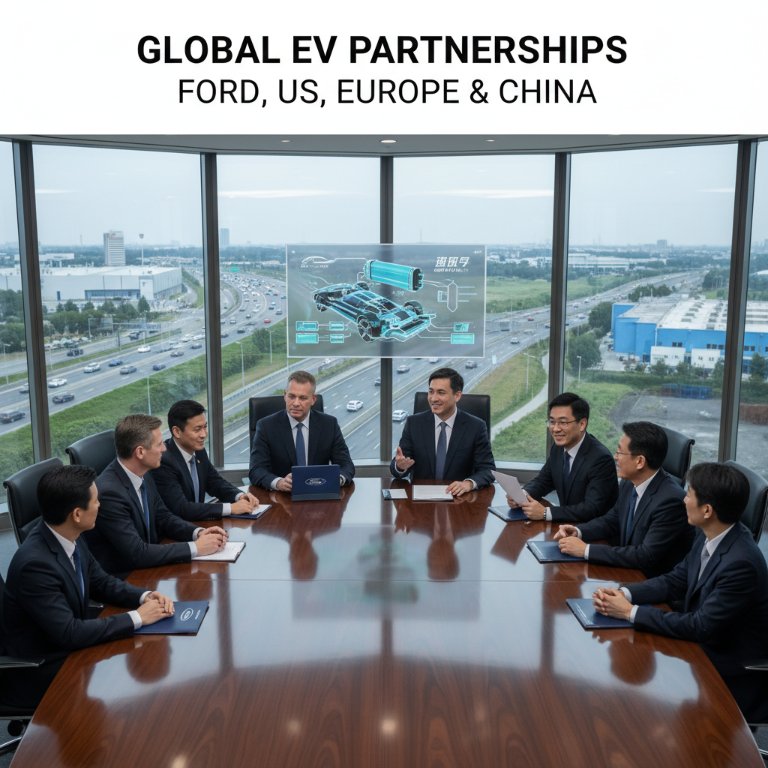
Ford Motor Company, a titan of American automotive manufacturing, is reportedly in advanced discussions that could fundamentally reshape its global electric vehicle (EV) strategy. In a move signaling a significant strategic pivot, the Dearborn automaker is exploring potential joint ventures and technology partnerships with Chinese EV powerhouses like Geely. This aggressive pursuit of collaboration, spanning discussions with both US and European officials, suggests Ford is not merely reacting to the fierce global EV competition but actively seeking innovative frameworks to navigate the challenging landscape, particularly in accessing cost-effective technology and utilizing its existing assets.
Ford's Strategic Pivot in a Competitive EV Landscape
Ford's current EV ambitions have been significant, with the company pouring billions into new platforms and battery development. However, the path has been fraught with challenges, including substantial losses in its Model e division and intense pressure from established EV leaders and aggressive new entrants. This move into deep discussions with Chinese automakers, including Geely, represents a clear acknowledgment of the cost and technological advantages often held by these companies. Rather than a pure 'build it all ourselves' approach, Ford appears to be considering a hybrid strategy that leverages external strengths to accelerate its EV transition and improve profitability.
The Transatlantic Tango: US Market Access Through Joint Ventures
Sources indicate that potential frameworks under discussion for US operations are particularly noteworthy. They involve allowing Chinese EV manufacturers to establish a presence in the American market through joint ventures where Ford, or another American entity, would hold a majority stake. This structure could offer a pragmatic solution to the escalating trade tensions and tariff barriers that currently impede direct Chinese EV imports. By essentially 'Americanizing' the production and control, such JVs could provide a pathway for advanced, cost-competitive Chinese EV technology to reach US consumers, while theoretically mitigating national security concerns and creating American jobs. This could be a game-changer for market access in a politically sensitive environment.
European Synergy: Capacity, Production, and Technology Sharing
In Europe, the discussions reportedly involve leveraging Ford's existing, and potentially underutilized, production capacity to build vehicles for Chinese partners like Geely. This is a savvy move to optimize asset utilization and generate revenue from existing infrastructure. Furthermore, the talks include sharing advanced vehicle technology, which could be a two-way street. Ford could gain access to cost-effective EV architectures, battery technology, or software solutions from its Chinese counterparts, while simultaneously offering its own expertise in areas like manufacturing scale, safety standards, or brand recognition in Western markets. This kind of collaboration could prove vital in the highly competitive European EV landscape, where Chinese brands are making significant inroads.
Why This Matters:
This is not merely another OEM partnership; it signals a potentially seismic shift in the global automotive landscape. For Ford, this represents a crucial, perhaps even 'do-or-die,' moment in its EV strategy.
- Cost Control and Speed to Market: Ford's Model e division has been hemorrhaging money, reporting billions in losses as it scales up. Partnering with Chinese manufacturers, renowned for their efficient supply chains and rapid development cycles, could drastically reduce Ford's development costs and accelerate its time to market for competitive new EV models. This is about survival and profitability in a fiercely competitive arena.
- Navigating Protectionism: The proposed US joint venture model directly addresses the political realities of protectionism and tariffs. By facilitating 'American-majority-controlled' ventures, Ford could unlock a pipeline of cost-effective EV technology for the US market, circumventing direct import barriers and potentially offering consumers more affordable options sooner. This could be a blueprint for other Western OEMs struggling with Chinese competition.
- Asset Utilization in Europe: Leveraging excess European production capacity for partners like Geely offers a direct path to monetizing existing assets. As Ford transitions its own European portfolio, ensuring factories remain productive is paramount, mitigating the financial strain of idle plants and potential job losses.
- The Rise of a New Automotive Order: This move signals a profound acknowledgment that the future of automotive manufacturing may not be solely Western-led. Chinese manufacturers have developed cutting-edge EV technology and efficient production methods. Ford's discussions suggest a willingness to integrate rather than solely compete, potentially setting a precedent for other legacy automakers.
Who Wins?
- Ford: Potential for reduced EV losses, faster product development, access to cheaper components/platforms, and optimized factory utilization.
- Chinese EV Manufacturers (e.g., Geely): A direct, politically palatable route into the lucrative US and European markets, gaining Western manufacturing expertise and brand association.
- Consumers (potentially): More affordable and technologically advanced EV options as cost barriers are reduced.
Who Loses?
- Legacy OEMs Resisting Collaboration: Those unwilling to adapt and engage with Chinese technology might fall further behind in cost-competitiveness and market share.
- Current EV Market Leaders (e.g., Tesla): Increased competition from potentially cheaper and varied EV offerings could intensify price wars.
Ford's proactive engagement with Chinese automakers and regulatory bodies marks a significant strategic re-evaluation, moving beyond traditional competitive models to embrace deep collaboration. This bold gambit, if successful, could provide Ford with the critical leverage needed to accelerate its EV transformation, mitigate financial losses, and successfully compete in a rapidly evolving global market. The industry will be watching closely to see if these discussions translate into concrete partnerships that redefine the future of automotive alliances.