EVs: The Grid's Next Powerhouses? New Research Unlocks V2G's Transformative Potential
Electric vehicles (EVs) are poised to transcend their role as mere transportation, transforming into critical assets for energy grids worldwide. A rec...
Editorial Team
World Of EV
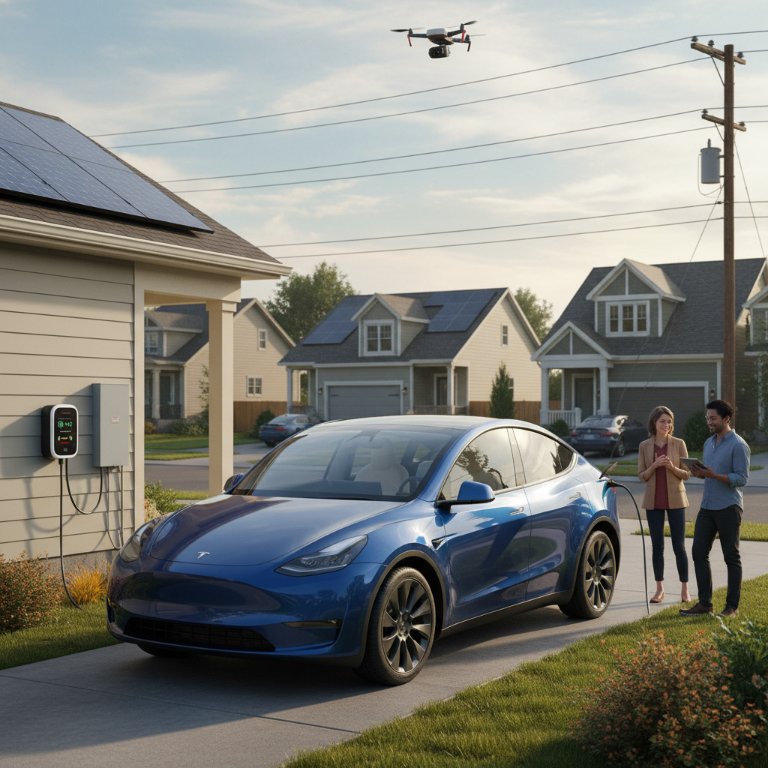
Electric vehicles (EVs) are poised to transcend their role as mere transportation, transforming into critical assets for energy grids worldwide. A recent Utilities Policy paper, championed by scientists including Serena Kim from North Carolina State University, highlights the profound potential of Vehicle-to-Grid (V2G) technology. This initiative isn't just about smart charging; it's a strategic move to leverage the immense, untapped energy storage within parked EVs, promising enhanced grid efficiency and a tangible reduction in ownership costs for EV drivers by allowing them to sell stored energy back to the grid or their homes when demand peaks.
For years, the promise of V2G has lingered on the horizon, often dismissed as futuristic speculation. However, with the rapid acceleration of EV adoption and the increasing imperative for grid resilience in the face of growing renewable energy sources and climate volatility, V2G is no longer a fringe concept. It represents a fundamental shift in how we perceive and utilize electric vehicles, turning them into dynamic participants in our energy ecosystem.
The V2G Vision Unpacked
Vehicle-to-Grid technology enables a bidirectional flow of energy, meaning EVs can both draw power from and supply power back to the grid. This intricate ballet of energy exchange is managed by sophisticated software and bidirectional charging stations, allowing an EV's high-capacity battery to act as a mobile energy storage unit. As Serena Kim, a data scientist and Assistant Professor at North Carolina State University and the study's corresponding author, aptly puts it, "Most EVs sit parked about 95% of the time. V2G technology allows that stored energy to flow back out of the vehicle and into the power grid, your home, or a building when it's needed most, like during a hot summer afternoon when everyone cranks the air conditioning."
The Utilities Policy paper emphasizes several key facets of V2G operation:
- Dynamic Grid Support: EVs can discharge stored electricity during peak demand times, alleviating strain on the grid and preventing costly infrastructure upgrades.
- Renewable Energy Integration: By storing surplus energy from intermittent sources like solar and wind, EVs can help balance supply and demand, making renewable energy more reliable.
- Enhanced Resilience: In the event of power outages, V2G-enabled EVs can serve as crucial backup power sources for homes and buildings.
Unlocking New Value for EV Owners
The economic incentives for EV owners are a major driver of V2G adoption. Drivers can capitalize on fluctuating electricity prices, charging their vehicles during off-peak hours when rates are low and selling power back to the grid during peak demand for a profit. This transforms the EV from a depreciating asset into a potential revenue generator. Studies indicate that V2G could add significant value to an EV, with some estimates suggesting an additional $600 annually in savings or income for participants.
Beyond direct financial compensation, V2G participation offers:
- Reduced Overall Ownership Costs: Lowering electricity bills through strategic charging and discharging.
- Energy Independence: The ability to power one's home during blackouts provides peace of mind and practical resilience.
- Contributing to Sustainability: EV owners become active participants in building a greener, more stable energy future.
Strengthening the Grid for a Renewable Future
The macro-level benefits for the energy grid are equally compelling. As utilities grapple with increasing demand and the integration of volatile renewable energy sources, V2G offers a decentralized, distributed energy storage solution. This distributed network of EV batteries can act as a virtual power plant (VPP), providing essential grid services such as frequency regulation and peak shaving. The sheer scale of potential storage is staggering; by 2030, an estimated 250 million EVs globally could collectively offer immense gigawatt-hours of flexible storage, significantly bolstering grid stability.
Why This Matters:
This Utilities Policy paper, underscored by the research of Serena Kim and her colleagues, isn't just another academic exercise; it's a clarion call for a paradigm shift in our energy infrastructure. The long-term implications are profound. We are witnessing the maturation of Vehicle-to-Grid technology from a niche concept to a mainstream solution for our evolving energy needs. This fundamentally changes the value proposition of owning an EV, moving it beyond emissions reductions to tangible economic benefits and critical grid support.
Who Wins?
- EV Owners: Gaining a new revenue stream and enhanced energy security.
- Grid Operators and Utilities: Acquiring invaluable flexibility, stability, and a cost-effective alternative to building new peaker plants or costly infrastructure upgrades.
- Renewable Energy Sector: Benefiting from a robust storage solution that mitigates intermittency, enabling broader adoption of solar and wind power.
- The Environment: Accelerated transition to cleaner energy and reduced reliance on fossil fuels for grid balancing.
What This Signals to the Market:
This research serves as a powerful signal to automakers to prioritize V2G compatibility in all future EV models. While some EVs, like the Ford F-150 Lightning with its Vehicle-to-Home (V2H) capabilities, have begun to scratch the surface, widespread V2G integration requires a concerted effort across the industry to standardize protocols and ensure interoperability. Furthermore, it underscores the need for proactive policy and regulatory frameworks that incentivize V2G participation and streamline implementation across different regions. Historically, institutional barriers, including a lack of clear compensation mechanisms and fragmented regulatory conditions, have slowed V2G adoption. This paper directly addresses these challenges, providing a roadmap for overcoming them.
In essence, the age of the EV as a passive consumer of electricity is rapidly drawing to a close. The future sees millions of electric vehicles not just reducing our carbon footprint, but actively bolstering our energy grids, making them more resilient, efficient, and ultimately, sustainable. The time for V2G is not coming; it is here, and the industry must accelerate its embrace to capitalize on this transformative potential.
Conclusion:
The shift towards Vehicle-to-Grid technology, as highlighted by the Utilities Policy paper and scientists like Serena Kim, represents a pivotal moment in the energy transition. By transforming EVs into dynamic power sources, we unlock unprecedented opportunities for grid stability, renewable energy integration, and economic benefits for EV owners. The challenge now lies in translating this undeniable potential into widespread adoption through robust infrastructure, supportive policies, and ubiquitous V2G-capable vehicles. The future of energy is distributed, smart, and increasingly, on wheels.