EV's Economic Edge Isn't Enough: The Industry's Urgent Mission to Build Consumer Trust
The electric vehicle revolution, heralded for its environmental benefits, also boasts a compelling financial proposition: significantly lower running ...
Editorial Team
World Of EV
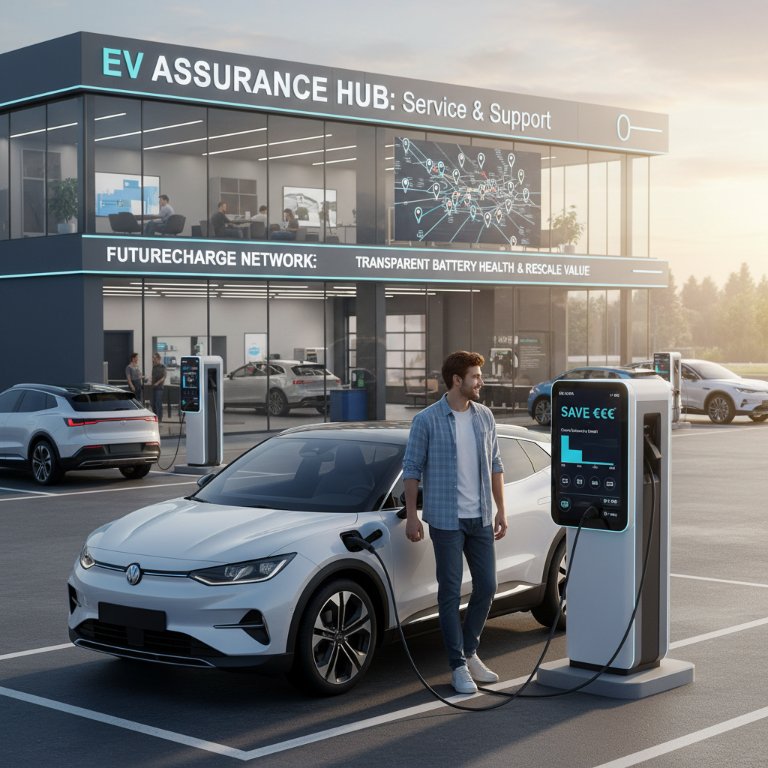
The electric vehicle revolution, heralded for its environmental benefits, also boasts a compelling financial proposition: significantly lower running costs and simpler maintenance compared to internal combustion engine (ICE) counterparts. Yet, despite these undeniable economic advantages and a lower total cost of ownership, mass-market adoption faces a stubborn adversary: a pervasive lack of consumer trust. This isn't about range anxiety anymore; it's a deeper skepticism regarding long-term reliability, support infrastructure, and the overall EV ownership ecosystem.
The Uncontestable Financial Logic of EVs
Electric vehicles are demonstrably cheaper to run per kilometer than their petrol or diesel counterparts. This efficiency is compounded by a reduced maintenance burden, thanks to fewer moving components and the complete absence of oil changes. Regenerative braking systems also prolong the life of conventional brake pads, further reducing service costs. Collectively, these factors contribute to a compellingly lower total cost of ownership over the vehicle's lifespan, making the economic argument for EVs robust.
The Persistent Trust Deficit: A Roadblock to Mass Adoption
Despite the clear financial incentives, consumer hesitation persists due to a critical lack of trust. Prospective buyers need unwavering assurance on several fronts:
- Long-term Vehicle Reliability: There's a lingering concern about the durability of battery packs and complex electronic systems over years of ownership.
- Availability of Assistance: Consumers worry about accessing qualified service and emergency assistance, especially if breakdowns occur far from specialized EV service centers.
- Developed EV Ecosystem: Doubts remain about the breadth and reliability of the charging infrastructure, questioning whether it can truly cater to daily needs and long-distance travel.
Manufacturers' Mandate: Cultivating Confidence
The onus falls squarely on manufacturers to actively address this trust deficit. Success in the mass market hinges on a concerted effort to:
- Develop truly user-friendly and reliable cars that instill confidence from day one.
- Establish comprehensive service networks, adequately trained and equipped to support EV-specific maintenance and repairs nationwide.
- Actively contribute to expanding and ensuring the reliability of public charging infrastructure, making it as seamless as refueling an ICE vehicle.
- Provide transparent, accessible information on crucial aspects like battery health metrics, total lifecycle costs, and realistic resale values to demystify EV ownership.
Why This Matters:
The stakes are higher than ever for the entire automotive industry. The early adopter phase, largely fueled by environmentalism and tech enthusiasm, is maturing. Mainstream buyers, inherently more risk-averse and value-conscious, now dominate the target demographic. For them, "cheaper to run" is secondary to "reliable, convenient, and predictable." Ignoring these fundamental trust issues risks stagnating EV growth and failing to meet ambitious decarbonization targets.
Who Wins? Brands that move beyond simply selling a vehicle and instead offer a holistic, reassuring ownership experience will dominate the next phase of EV adoption. This means integrated charging solutions, proactive customer support, transparent communication channels, and significant investment in robust dealer training for EV servicing. Companies that effectively address the entire ownership lifecycle, not just the purchase price, will build invaluable loyalty and sustainable market share.
Who Loses? Manufacturers who continue to prioritize raw specs or flashy marketing over foundational reliability, robust support infrastructure, and genuine transparency will struggle to gain traction. Those with a history of software glitches, opaque warranty terms, or insufficient service points will find themselves rapidly losing ground to more customer-centric competitors. For some traditional automakers playing catch-up, getting this wrong could permanently cede significant market share, turning this into a do-or-die moment.
Market Signal: This signals a crucial shift for the entire industry. The focus is no longer solely on maximizing range or blistering acceleration, but on building unwavering trust, ensuring convenience, and achieving the seamless integration of the EV into daily life. It's a clear call for the industry to mature and provide, or even surpass, the level of confidence consumers have historically placed in ICE vehicles.
Conclusion:
While the economic argument for electric vehicles remains potent, the path to widespread adoption is undeniably paved with consumer skepticism. The industry stands at a pivotal moment, where merely offering a cheaper kilowatt-hour won't suffice. Building an impregnable fortress of trust—through superior product reliability, ubiquitous and dependable charging, and crystal-clear communication—is the imperative that will truly unlock the full potential of the EV revolution.