EV Loyalty Wobbles: Why a Growing Number of Owners Are Glancing Back at Gas and Hybrids
For years, the narrative has been clear: once you go electric, you never go back. EV enthusiasts and early adopters have largely been resolute in thei...
Editorial Team
World Of EV
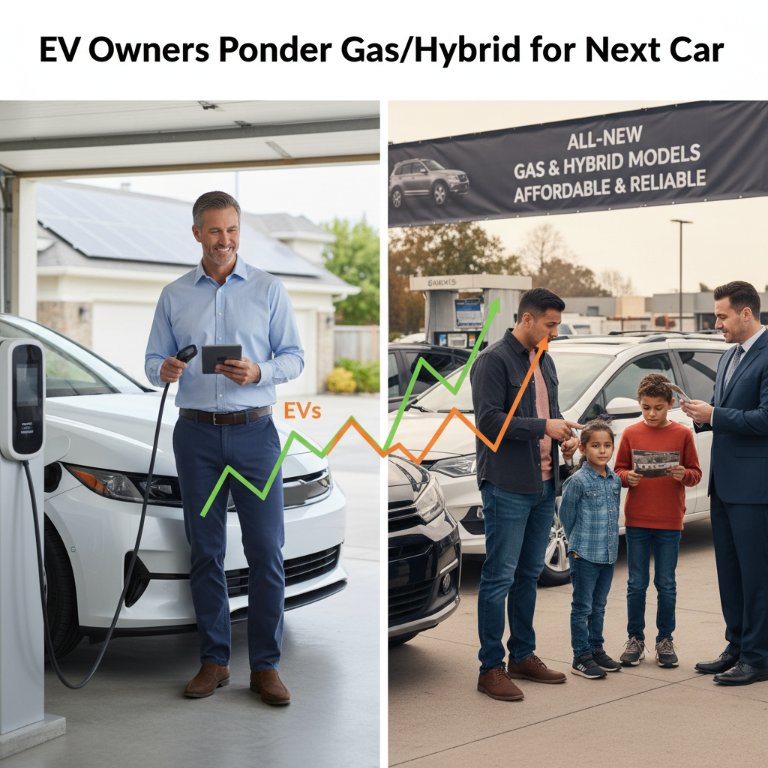
For years, the narrative has been clear: once you go electric, you never go back. EV enthusiasts and early adopters have largely been resolute in their commitment, upgrading from one electric vehicle to the next. However, new data signals a nuanced shift in this once-unshakeable loyalty. While the majority of current EV owners still opt for another electric vehicle for their subsequent purchase, a significant and growing percentage are now openly considering gas-powered vehicles or hybrids, a trend that warrants serious attention from automakers and industry observers alike.
The Nuance of EV Retention
The allure of electric vehicles remains strong, driven by environmental consciousness, lower running costs (for some), and the superior driving dynamics often associated with instant torque. Yet, the recent data unveils a subtle but critical crack in the EV ownership experience. It suggests that while the EV revolution is well underway, the journey isn't a one-way street for everyone. This emerging trend challenges the industry's assumption of automatic repeat purchases and spotlights evolving consumer expectations as the market matures beyond its early adopter phase.
Driving Factors Behind the Shift
Digging deeper, the reasons cited by EV owners for their potential pivot back to internal combustion engine (ICE) or hybrid vehicles are pragmatic and segment-specific. This isn't a wholesale rejection of EV technology but rather a reflection of market gaps and economic realities:
- Lack of EV Options in Specific Vehicle Segments: The EV market, while expanding rapidly, still suffers from significant white space. Truck buyers seeking heavy-duty towing capabilities, families needing truly long-range, affordable three-row SUVs, or enthusiasts looking for specific performance niches might find current EV offerings limited or prohibitively expensive. This forces some otherwise loyal EV owners to look at established ICE or hybrid alternatives that meet their specific utility needs more effectively.
- Cost Considerations: The upfront purchase price of many EVs remains a barrier, especially when comparing equivalent segments to their ICE counterparts. Furthermore, while fuel costs might be lower, factors like insurance premiums, potential battery replacement costs (though increasingly rare), and the still-developing public charging infrastructure can introduce financial uncertainties that push some consumers to consider the predictable cost structures of gas or hybrid vehicles. The promise of savings doesn't always materialize for every owner, particularly those without access to convenient home charging.
Why This Matters:
This evolving consumer sentiment is a critical bellwether for the entire automotive industry, signaling both challenges and opportunities. For pure-play EV manufacturers, it's a stark reminder that innovation cannot stop at the powertrain; they must rapidly diversify their portfolios to cover more segments and price points. Companies like Tesla, while dominant, face increasing pressure to introduce more affordable models and broader utility vehicles to retain customers who might otherwise stray. This isn't just about offering an EV, but offering the right EV for every need.
Conversely, legacy automakers with robust hybrid programs, such as Toyota or Honda, find themselves in a surprisingly strong position. Their established hybrid technology offers a compelling bridge for consumers seeking improved fuel economy and reduced emissions without the perceived compromises of a full EV, such as range anxiety or charging dependency. This trend could accelerate the development of more advanced plug-in hybrids and diverse mild-hybrid options, providing consumers with a wider array of transitional choices. The market is clearly demanding more than a binary 'gas or electric' decision; it craves flexibility and tailored solutions. The industry's ability to respond to these nuanced demands—whether through more segment-diverse EVs, more compelling hybrid options, or a combination of both—will dictate who wins the next phase of the automotive transition.
Conclusion
The revelation that a growing number of EV owners are open to considering gas or hybrid vehicles for their next purchase isn't a setback for the EV movement but a maturation point. It underscores that while the core appeal of electric propulsion is undeniable, the market is no longer solely driven by early adopters willing to overlook certain compromises. To maintain momentum and accelerate mainstream adoption, the automotive industry must now pivot to address the practical considerations of cost, segment availability, and total ownership experience. The future of sustainable mobility will hinge not just on creating great EVs, but on creating an EV ecosystem that seamlessly meets the diverse needs of every driver.