EV Collision Claims Accelerate Amid Cooling Sales: The Hidden Costs of Advanced Tech
The electric vehicle (EV) market is currently navigating a paradoxical landscape, with collision claims surging despite a recent slowdown in new batte...
Editorial Team
World Of EV
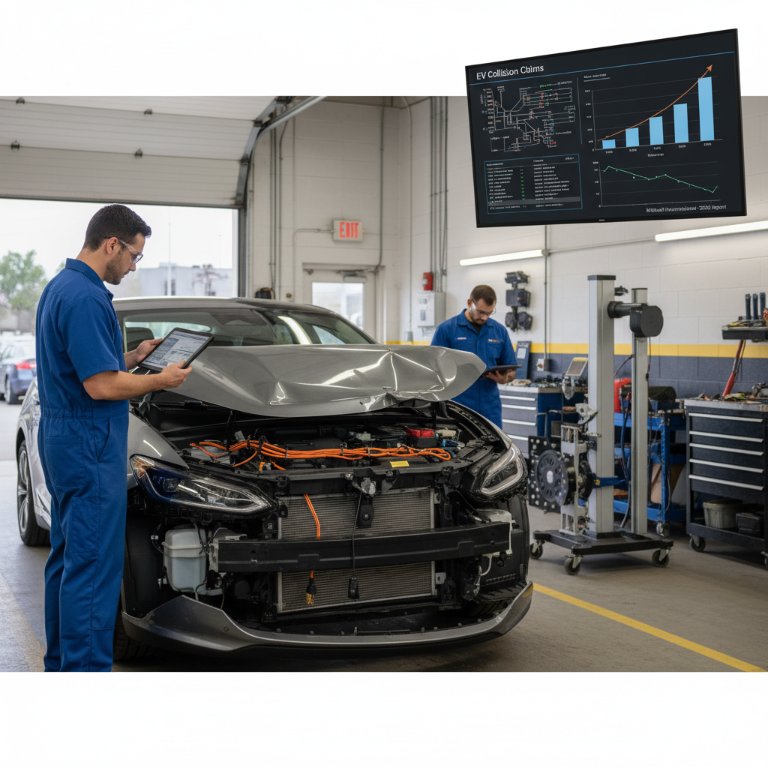
The electric vehicle (EV) market is currently navigating a paradoxical landscape, with collision claims surging despite a recent slowdown in new battery electric vehicle (BEV) sales. This unexpected trend, highlighted in Mitchell International's "Plugged-In: EV Collision Insights" report for 2025, underscores the growing complexities and unique challenges inherent in the EV ecosystem. As the industry matures, stakeholders—from manufacturers to insurers and consumers—are confronting the true cost of cutting-edge automotive technology.
The Paradox of Rising Claims and Cooling Sales
The Mitchell report reveals a significant uptick in EV collision claims across North America. The United States experienced a 14% increase in BEV collision claims, while Canada saw an even more substantial 24% jump in 2025. This surge is particularly striking when juxtaposed against the backdrop of a cooling market for new BEV purchases, which saw a roughly 2% decrease in the U.S. in 2025. This means that while fewer new EVs are entering the market, the existing fleet is encountering more incidents, or the claims rate per vehicle on the road is increasing.
- U.S. BEV collision claims: Up 14%
- Canadian BEV collision claims: Up 24%
- U.S. new BEV sales: Down approximately 2%
The Intricacies of EV Repair: Beyond the Sheet Metal
The primary driver behind the heightened concern in EV collision repair lies in the inherent sophistication of these vehicles. Unlike traditional internal combustion engine (ICE) cars, BEVs boast complex electrical architectures, advanced software-driven systems, and an abundance of integrated sensors. These sophisticated designs necessitate specialized diagnostic and calibration operations following a collision, even for seemingly minor damage. This translates directly into increased repair costs and extended cycle times, posing a significant challenge for collision centers and a potential headache for vehicle owners and insurers. The reliance on original equipment manufacturer (OEM) parts, often accounting for a higher percentage of repair costs in EVs compared to ICE vehicles, further contributes to these challenges.
A Glimmer of Hope? Declining Severity
Amidst the rising volume of claims and the complexity of repairs, the report offers a surprising silver lining: the average severity for repairable BEVs saw a slight decline. In the U.S., average repair severity decreased by 5%, while Canada experienced a 2% reduction. This suggests that while more EVs are involved in collisions, the average cost of repairing those that are deemed repairable is moderating. This could be attributed to evolving repair methodologies, improved vehicle designs that compartmentalize damage, or a higher proportion of minor incidents in the overall claims volume. However, it's crucial to note that despite this decline, BEV repair costs generally remain higher than those for ICE vehicles.
Why This Matters:
This evolving landscape has profound implications for every segment of the automotive ecosystem. For consumers, the rising claims frequency and the inherent repair complexities signal potentially higher insurance premiums and longer periods without their vehicles. While average repair severity is trending down, the total cost of ownership over the lifetime of an EV, particularly concerning post-collision scenarios, remains a critical factor that prospective buyers must consider. This isn't just about purchase price and range anymore; it's about the full lifecycle cost.
For insurers, the data demands a strategic re-evaluation of underwriting models and claims processing. The need for specialized repair networks, comprehensive training for adjusters on EV architecture, and access to accurate diagnostic data becomes paramount. Insurers who fail to adapt will face mounting costs and customer dissatisfaction. This is a "do-or-die" moment for traditional insurance models to embrace the EV reality.
Automakers must intensify their focus on repairability in vehicle design. While advanced safety features aim to prevent accidents, the reality of collisions means that designing for efficient and cost-effective repair is equally crucial. This also necessitates improved data sharing with the independent repair sector and robust training programs for technicians to ensure proper and safe repairs. Manufacturers that lead in repair-friendly designs will gain a significant competitive advantage and improve overall customer satisfaction.
Finally, the repair industry faces both a challenge and an opportunity. The demand for highly specialized tools, advanced diagnostic equipment, and extensively trained technicians will only grow. Shops that invest in these capabilities and achieve relevant certifications will be well-positioned to thrive. Those that don't risk being left behind in a rapidly evolving market.
In essence, the Mitchell report signals that the EV market, while still on a long-term growth trajectory, is entering a new phase of maturity where operational realities, particularly around collisions and repairs, are taking center stage. The initial hype is giving way to a more pragmatic assessment of total cost and ownership experience.
The increasing volume of EV collision claims, even as sales growth moderates, highlights a critical juncture for the industry. While declining repair severity offers a degree of optimism, the underlying complexities of EV architecture demand a collaborative effort from automakers, insurers, and the repair sector to ensure sustainable growth and a positive ownership experience. The future of EV adoption hinges not just on technological advancements, but on robust support infrastructure that addresses the real-world challenges of vehicle ownership.