Decisive Study Shatters EV Battery Longevity Fears, Paving Way for Accelerated Adoption
For years, the specter of rapidly degrading batteries and exorbitant replacement costs has loomed large over the electric vehicle market, a persistent...
Editorial Team
World Of EV
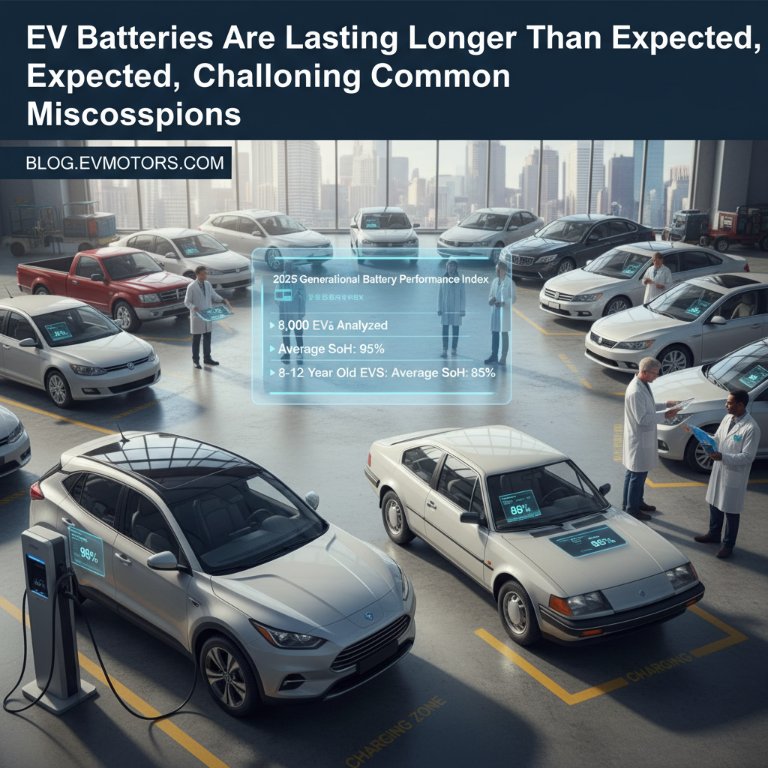
For years, the specter of rapidly degrading batteries and exorbitant replacement costs has loomed large over the electric vehicle market, a persistent doubt in the minds of prospective buyers and a talking point for EV skeptics. Now, a groundbreaking 2025 Generational Battery Performance Index study has decisively put those anxieties to rest, delivering irrefutable evidence of robust and long-lasting EV battery health.
This isn't merely anecdotal evidence; it's a comprehensive data deep dive that should reshape public perception. The study, which meticulously analyzed 8,000 electric vehicles from 36 different manufacturers, spanning from brand-new models to those a venerable 12 years old, paints an overwhelmingly positive picture for the durability of EV powertrains. This critical insight comes at a pivotal moment, as the industry strives to overcome lingering consumer apprehensions and accelerate the global transition to sustainable transportation.
The Numbers Don't Lie: Stellar State of Health Across the Board
The 2025 Generational Battery Performance Index offers a clear, data-driven rebuttal to the pervasive myth of short-lived EV batteries. Key findings from the study include:
- Average State of Health (SoH): The entire sample of 8,000 EVs, encompassing a wide range of ages and manufacturers, exhibited an impressive average battery State of Health (SoH) of 95%.
- Older EVs Hold Strong: Even the oldest segment of the study, vehicles ranging from 8 to 12 years old, maintained a remarkable average SoH of 85%.
These figures aren't just good; they're exceptional. For context, most EV manufacturers offer warranties around 8 years or 100,000 miles, guaranteeing a minimum SoH (often around 70%). This study indicates that real-world performance significantly exceeds these warranty thresholds, offering substantial peace of mind to owners and unequivocally demonstrating that battery degradation is a far slower and less significant issue than commonly feared. It's a stark contrast to early, often fear-mongering narratives that suggested a steep drop-off in battery capacity after just a few years, leaving owners with expensive paperweights.
Why This Matters:
This study is a game-changer, fundamentally altering the narrative around EV battery longevity and its economic implications. Here's our expert take on the long-term ramifications:
- For EV Owners and Prospective Buyers: This data is a monumental win for consumer confidence. It directly addresses the silent question: "Will my EV battery die after a few years, leaving me with a costly replacement?" The answer is a resounding 'no.' This translates to stronger resale values for used EVs, reduced long-term ownership anxieties, and a significant boost to the overall attractiveness of electric vehicles as a practical, reliable investment. Owners can now feel much more secure that their significant investment will retain its core functionality for well over a decade.
- For the EV Industry: Manufacturers gain an invaluable, independently validated talking point. This study provides concrete evidence to counter misinformation and will empower sales teams and marketing departments to more aggressively promote the durability of their products. It could also lead to a reassessment of warranty periods, potentially allowing manufacturers to offer even more compelling guarantees, or at least highlighting that current warranties are extremely conservative. Moreover, by removing a major psychological barrier, the industry can expect an acceleration in EV adoption rates as more consumers overcome their hesitation.
- Market Signals and Future Implications: This data signals a maturing of EV technology. With battery longevity largely proven, the market's focus can shift even more decisively towards other critical areas like charging infrastructure, charging speed, and raw material sourcing. It also suggests that the 'battery replacement' market might not be the lucrative segment some anticipated, at least not for early and moderate-aged vehicles. This bolsters the investment case for EV companies and related infrastructure, as the foundational technology proves its mettle.
This definitive study marks a turning point in the public discourse surrounding electric vehicles. It unequivocally validates the robust engineering behind modern EV batteries, providing essential credibility to the entire industry. As "World Of EV" has long maintained, the future is electric, and this latest data confirms that future is built on a foundation of enduring and reliable technology.
The long-held anxieties about EV battery life are now firmly in the rearview mirror. The road ahead for electric mobility looks clearer and more compelling than ever, inviting a new wave of drivers to embrace the future with confidence.