Dealer Service Sees Modest Gains, But Crippling Wait Times Threaten EV Customer Retention
The automotive retail landscape is a dynamic arena, and the latest JD Power 2026 U.S. Customer Service Index (CSI) Study reveals a nuanced picture of ...
Editorial Team
World Of EV
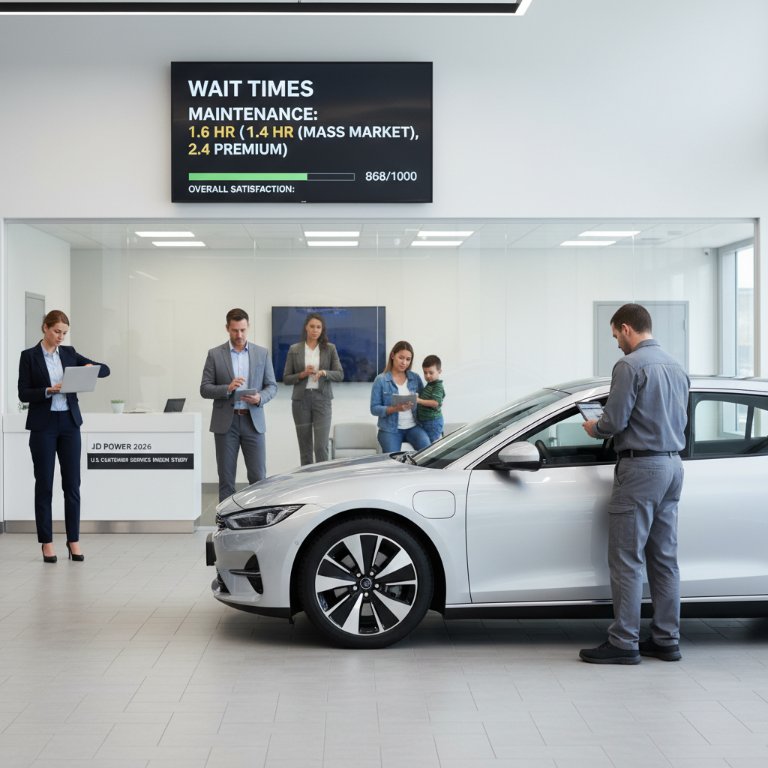
The automotive retail landscape is a dynamic arena, and the latest JD Power 2026 U.S. Customer Service Index (CSI) Study reveals a nuanced picture of progress overshadowed by persistent challenges. While overall dealer service satisfaction has edged up by three points to an average of 868 out of 1,000, a deeper dive into the data unearths a critical vulnerability: the glacial pace of routine maintenance. This issue, long a point of frustration for internal combustion engine (ICE) vehicle owners, presents a particularly ominous forecast for the burgeoning electric vehicle (EV) market and its demanding clientele.
The Illusion of Improvement: Satisfaction vs. Efficiency
The slight uptick in overall satisfaction, while seemingly positive, masks a significant operational flaw within dealership service departments. For years, the industry has struggled with throughput, and the 2026 CSI study underscores that this fundamental problem remains largely unaddressed. Customers are still enduring disproportionately long waits for basic maintenance tasks like oil changes and tire rotations—services that are often swift and efficient at independent aftermarket facilities.
Specifically, the disparity is stark: maintenance work at dealerships continues to take approximately three times longer than comparable services performed at aftermarket operations. This translates to an average wait of 1.61 hours for mass-market customers and a staggering 2.46 hours for premium brand owners. These prolonged waits directly contradict the expectation of convenience and efficiency that today's consumers, especially those investing in cutting-edge EV technology, demand from their vehicle ownership experience. The implication is clear: a failure to significantly minimize completion times will invariably hamper customer experience and, critically, retention.
Why This Matters:
The JD Power 2026 CSI study is more than just a snapshot of customer sentiment; it’s a flashing red warning light for automotive dealerships, particularly as the industry accelerates its shift towards electrification. The core issue—inefficient service times—will disproportionately impact the burgeoning EV segment for several key reasons:
- EV Owners Expect Premium Service: Many early EV adopters are tech-savvy and accustomed to seamless, on-demand services in other aspects of their lives. Extended wait times for even simple checks or software updates at a dealership will be a significant deterrent, undermining the premium experience often associated with new EV technology.
- The Service Mix Changes: While EVs eliminate traditional maintenance like oil changes, they introduce new service needs, such as battery diagnostics, software updates, and specialized component checks. If dealers can’t efficiently handle existing, simpler tasks, their capacity and capability to deliver prompt and expert EV-specific service will be severely questioned.
- Direct-to-Consumer Models Loom: Brands like Tesla, and increasingly others exploring direct sales, often highlight streamlined service processes or mobile service options. Traditional dealerships, with their current inefficiencies, risk losing a competitive edge if they cannot match or exceed these alternative service models' convenience and speed.
- Retention and Loyalty at Risk: In a market where loyalty is increasingly hard-won, a poor service experience can quickly drive customers away—not just from the dealer, but potentially from the brand itself. For EV owners, whose service needs are less frequent but often more specialized, making each interaction count with speed and expertise is paramount.
In essence, dealers who fail to address these wait time inefficiencies risk becoming a bottleneck in the EV adoption curve. The market signals are clear: a focus on operational excellence, accelerated technician training, and streamlined service bay management are no longer optional but existential requirements for sustained success.
The 2026 CSI study presents a paradoxical scenario: a slight improvement in overall satisfaction existing alongside a glaring operational weakness. For dealerships looking to thrive in an electrified future, this isn't just a recommendation for improvement; it’s an urgent mandate to dramatically rethink and re-engineer their service operations. The path to long-term customer loyalty, especially among demanding EV owners, will undoubtedly be paved with speed and efficiency.