Cybertruck Ignites Home Energy Revolution: Tesla's Powershare V2G Program Lands in Texas, Eyes California
Tesla's radical Cybertruck is shedding its polarizing exterior to reveal a groundbreaking capability: it’s poised to transform from a mere vehicle int...
Editorial Team
World Of EV
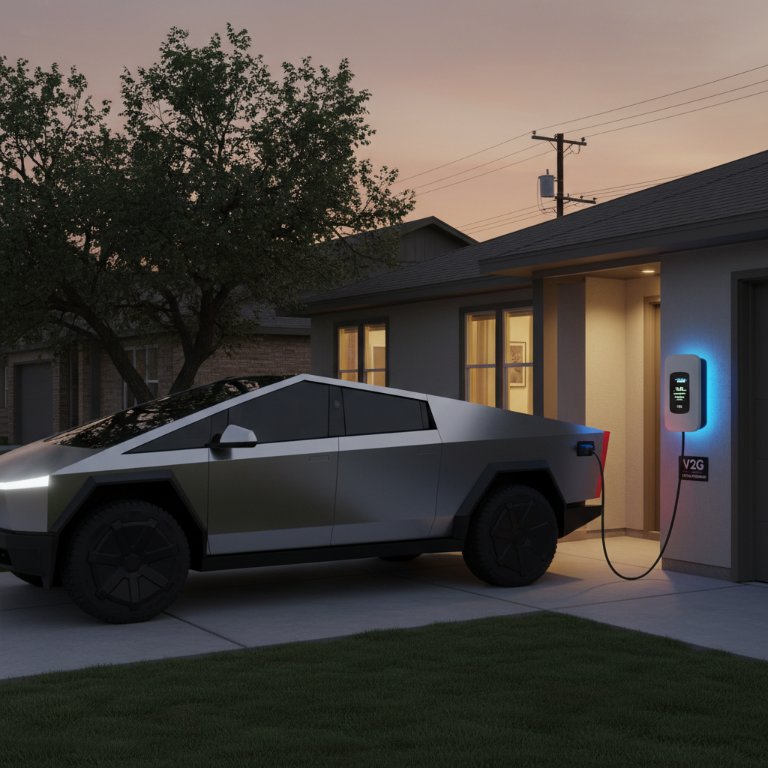
Tesla's radical Cybertruck is shedding its polarizing exterior to reveal a groundbreaking capability: it’s poised to transform from a mere vehicle into a critical component of home energy independence and grid stability. For years, the automotive industry has extolled the potential of Vehicle-to-Grid (V2G) and Vehicle-to-Home (V2H) technologies, allowing electric vehicles to not merely consume power but also to act as substantial mobile batteries. While competitors like Ford with its F-150 Lightning have notably led in this space, Tesla has now unequivocally entered the fray, launching its Cybertruck Powershare V2G program in Texas, with an imminent expansion to California. This move redefines the Cybertruck's utility, making it a pivotal player in the evolving energy landscape.
Texas Takes the Lead: Powershare Grid Support in Action
Tesla initiated its innovative Cybertruck V2G program in Texas, leveraging the truck's inherent Powershare capability. This program, officially dubbed "Powershare Grid Support," allows eligible Cybertruck owners to contribute energy back to the grid during periods of high demand, receiving compensation in return. This directly addresses critical grid stress events, offering a decentralized solution for energy stability. Owners participate on an invitation-only basis through the Tesla app, seamlessly discharging excess energy.
Key aspects of the Texas rollout include:
- Up to 11.5 kW of Power: The Cybertruck's Powershare system delivers a robust 11.5 kW of AC output for home backup, a significant capacity capable of powering most essential household appliances during an outage.
- Integrated Ecosystem: Enabling this bidirectional energy transfer requires a Tesla Wall Connector and either a Tesla Gateway or Powerwall system, integrating the Cybertruck directly into Tesla's broader home energy solution.
- Utility Partnerships: The Texas program works in conjunction with local utilities such as CenterPoint Energy and Oncor, demonstrating a crucial collaboration for successful grid integration.
California Calling: Expanding the Grid Partnership
Building on the Texas pilot, Tesla plans to expand the Powershare V2G program to California. This expansion is tightly linked to eligibility criteria tied to major local utilities, including PG&E, SCE, and SDG&E. California, a state frequently grappling with energy demand fluctuations and grid reliability concerns, represents a strategic next step for Tesla's V2G ambitions. The collaboration with these established utilities is paramount, enabling the Cybertruck to function as a responsive, distributed energy resource that can help stabilize regional power grids.
Why This Matters:
Tesla's entry into robust V2G functionality with the Cybertruck is far more than a feature announcement; it marks a strategic inflection point for the company, EV owners, and the energy industry at large.
For Tesla: A Strategic Catch-Up and Ecosystem Reinforcement: For years, Tesla, despite its pioneering EV status, lagged behind rivals like the Ford F-150 Lightning, which offered 9.6 kW of V2H power (or up to 19.2kW with specific charging infrastructure) or the Chevrolet Silverado EV with its 10.2 kW V2H capability. This Powershare V2G program allows Tesla to not only catch up but potentially set new benchmarks for seamless integration within its existing energy ecosystem. It transforms the Cybertruck into an even more compelling value proposition, especially for customers in regions prone to power outages or seeking greater energy independence. This move deeply entwines Tesla's automotive and energy divisions, strengthening the appeal of Powerwall and solar solutions by offering another layer of distributed energy resilience. It elevates the Cybertruck from merely a vehicle to a dynamic energy asset.
For EV Enthusiasts and Prospective Buyers: Tangible Utility and Economic Benefits: The silent question from consumers – "Why does this matter to me?" – is now answered emphatically. Cybertruck owners gain unprecedented control and security over their home energy. Imagine powering your entire home for days during a blackout using your truck's battery, or even earning money by selling excess energy back to the grid during peak demand. This capability fundamentally changes the calculation for EV ownership, positioning the Cybertruck as a critical household appliance and a smart financial investment. The 11.5 kW output is substantial, offering practical, real-world utility that outstrips many portable generators.
For the Grid and Utilities: A New Era of Distributed Energy Resources: V2G technology is a game-changer for grid stability, particularly as the world transitions to more intermittent renewable energy sources like solar and wind. Electric vehicles, when integrated through V2G programs, become flexible, distributed energy storage units that utilities can tap into during peak demand or emergencies, mitigating the risk of brownouts and blackouts. Tesla's emphasis on utility partnerships signifies a mature approach to integrating EV fleets into grid management strategies, paving the way for a more resilient and sustainable energy future.
Competitive Landscape: Pressure Mounts: This bold step by Tesla will undoubtedly intensify pressure on other automakers to accelerate their V2G and V2H development. The market is shifting from simply offering powerful EVs to demanding intelligent, integrated energy solutions. Consumers win as manufacturers innovate to provide more feature-rich, multi-functional vehicles that serve a broader purpose than just transportation. Companies that fail to recognize this shift risk falling behind in the rapidly evolving EV and energy sectors.
The Cybertruck's journey from audacious concept to energy linchpin underscores a profound transformation in how we perceive electric vehicles. It’s no longer just about emission-free driving; it’s about a comprehensive, integrated energy ecosystem that promises greater resilience, efficiency, and potentially, economic benefit for its users. Tesla's Powershare V2G program is not merely an upgrade; it's a decisive leap towards a future where your vehicle plays an active role in powering your home and supporting the grid.