Cracking the Code: Misinformation, Not Just Miles, Stalls Rural EV Adoption
The transition to electric vehicles (EVs) faces a nuanced challenge in rural America, a recent University of Michigan survey strikingly reveals. While...
Editorial Team
World Of EV
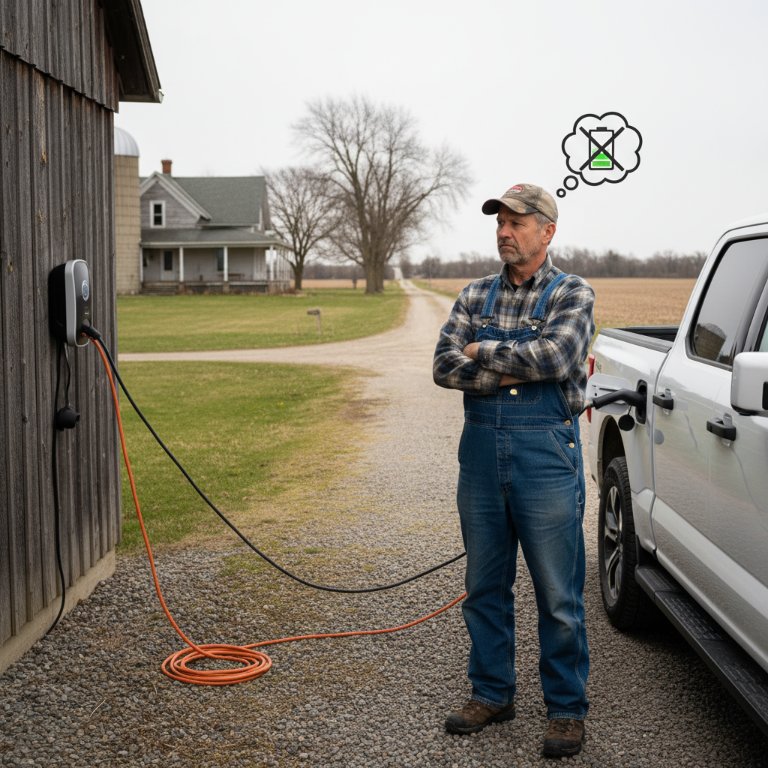
The transition to electric vehicles (EVs) faces a nuanced challenge in rural America, a recent University of Michigan survey strikingly reveals. While the automotive industry, and indeed our publication, often highlights advancements in battery technology and charging infrastructure, a new study uncovers a more fundamental roadblock: deeply entrenched misinformation. In rural Michigan, a mere 5% of residents would consider an EV for their next purchase, a statistic that demands immediate attention from manufacturers and policymakers alike.
This isn't simply a matter of economics or limited charging stations, though these concerns are certainly present. The Michigan research points to a significant gap in understanding basic EV ownership. As the industry pushes forward with innovative designs and enhanced capabilities, it appears a substantial portion of the population is operating on outdated or incorrect assumptions about EV practicality, particularly regarding daily use and long-term costs.
The Rural EV Divide: More Than Just Infrastructure
The survey clearly outlined the primary anxieties among rural Michigan residents regarding EVs. These concerns are familiar to anyone tracking EV adoption: initial cost, limited access to charging infrastructure, and the perceived inability of current EVs to handle long driving distances. While these are legitimate considerations that impact purchasing decisions, the Michigan study delves deeper, suggesting that these fears are often exacerbated by a lack of accurate information. This isn't just about building more chargers; it's about addressing a pervasive knowledge deficit that holds back adoption in crucial demographics.
Unpacking the Misconceptions: Home Charging and Battery Fears
One of the most revealing findings from the University of Michigan researchers highlights the widespread misunderstanding surrounding convenient EV charging. A staggering 42% of respondents incorrectly believed they could not charge an EV overnight at home. This statistic underscores a critical failure in public education, as home charging – even with a standard 120V outlet (Level 1) or a readily installed 240V outlet (Level 2) – is a cornerstone of EV ownership convenience, mimicking the ease of charging a smartphone. For most drivers, Level 1 or 2 charging easily covers daily driving needs by simply plugging in overnight.
Furthermore, the survey identified a common fear of prohibitive battery replacement costs. Many prospective buyers remain unaware of the robust warranty protections offered by virtually all EV manufacturers. These warranties typically cover battery pack replacement for at least 80% capacity over a period of 10 years or 150,000 miles. This level of coverage, often exceeding that for traditional powertrain components, directly addresses one of the most significant perceived financial risks of EV ownership, yet the message clearly isn't reaching rural consumers.
Why This Matters:
This Michigan study serves as a crucial bellwether, signaling a broader challenge for the entire electric vehicle ecosystem. It illuminates that the next phase of EV adoption hinges less on groundbreaking technological leaps and more on fundamental consumer education and myth-busting. Ignoring these findings means risking a significant portion of the potential market, particularly in areas critical for national EV transition targets.
- Who Wins: EV manufacturers, charging network providers, and policymakers who prioritize transparent, accessible, and targeted educational campaigns. Brands that proactively address misinformation through clear communication, dealer training, and community outreach will gain a significant competitive advantage. Those who invest in demystifying home charging, explaining warranties, and showcasing real-world rural EV use cases will build trust and accelerate adoption beyond urban centers.
- Who Loses: Companies and initiatives that continue to assume the market will educate itself, or that a 'one-size-fits-all' marketing approach will work across diverse demographics. Relying solely on product features without dismantling pervasive myths will lead to stalled growth and missed opportunities in key markets.
- Signal to the Market: This is a clarion call for a strategic shift. The industry must move beyond simply selling cars and toward a more comprehensive approach that includes robust public information campaigns. The data suggests that overcoming the 'last mile' of EV adoption isn't just about physical infrastructure, but about conquering informational barriers. A failure to address these fundamental misunderstandings will create a persistent ceiling on EV market penetration, leaving a significant portion of the population on the sidelines, regardless of product innovation.
Ultimately, the findings from rural Michigan underscore that expanding EV adoption requires a multi-pronged approach. While continued advancements in battery technology, affordability, and charging infrastructure are vital, they must be paired with an equally vigorous effort to educate the public and dispel common myths. The future of the electric transition depends as much on accurate information as it does on advanced engineering.