Consumer Reports Exposes Harsh Reality: Key EVs Grapple with Alarming Reliability Issues
The electrifying pace of the automotive industry has hit a jarring speed bump. Consumer Reports, a trusted beacon for consumer advocacy, just unleashe...
Editorial Team
World Of EV
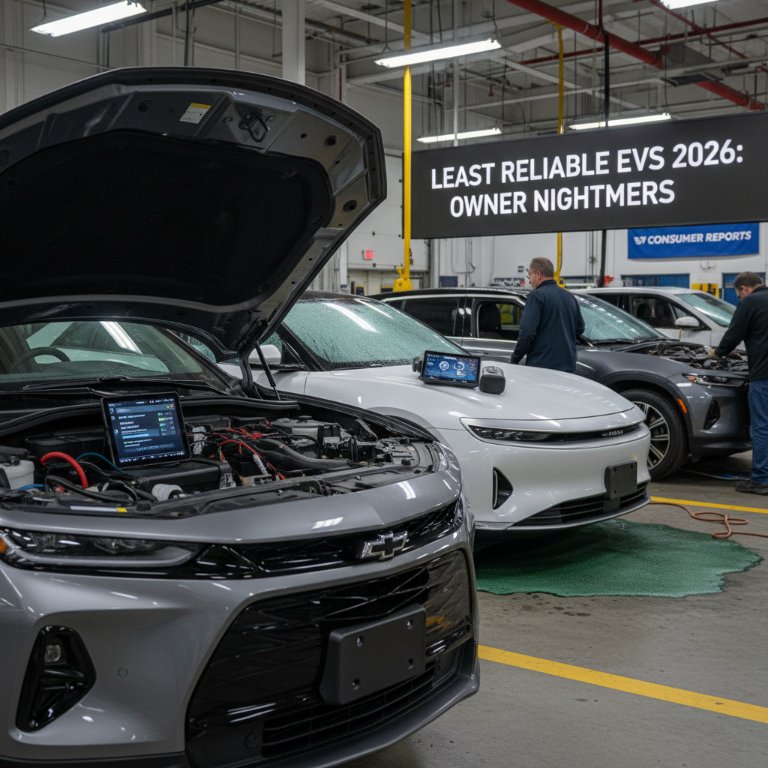
The electrifying pace of the automotive industry has hit a jarring speed bump. Consumer Reports, a trusted beacon for consumer advocacy, just unleashed its 2026 list of least reliable electric vehicles, sending ripples of concern through the nascent EV market. This isn't just about minor annoyances; the report spotlights a troubling pattern of fundamental flaws – from crippling software glitches to critical battery malfunctions – plaguing some of the most anticipated models on the road. For prospective EV owners and industry veterans alike, these findings underscore the persistent growing pains of a technology still striving for widespread maturity and dependable performance.
The Unsettling Truth: Software, Batteries, and Basic Functions Falter
The report paints a stark picture: across multiple 2026 EV models, owners are battling a recurring litany of complaints. Software issues are proving to be the Achilles' heel, manifesting in everything from infotainment system freezes to critical operational failures. Beyond the digital realm, battery malfunctions – the very heart of an EV – are a serious red flag, raising concerns about range, performance, and long-term durability. Even seemingly mundane components like climate control systems and charging doors are proving problematic, highlighting a lack of robust engineering and quality control in areas often taken for granted in internal combustion engine (ICE) vehicles. This trend signals that while the industry innovates at breakneck speed, the foundational elements of reliability are struggling to keep pace.
Chevrolet Blazer EV: Ultium's Early Stumbles Raise Eyebrows
General Motors' highly anticipated 2026 Chevrolet Blazer EV, a cornerstone of their ambitious Ultium platform strategy, is unfortunately making headlines for the wrong reasons. Consumer Reports points to significant electronic issues and battery malfunctions as primary concerns. For GM, who has heavily invested in Ultium as the modular backbone for its electric future – a strategy designed to streamline production and ensure consistency – these early reliability woes are particularly damaging. Recalling the early software hiccups and high-profile battery recall associated with the Chevrolet Bolt EV, the Blazer's struggles suggest that GM's learning curve with EV architecture and software integration remains steeper than many hoped. Consumers expecting a polished product from a global automotive giant might find themselves hesitant, wondering if the promise of Ultium is still more potential than proven performance.
Rivian R1S: Rugged Dreams Meet Software Nightmares
Rivian, the darling of the electric adventure segment, finds its 2026 R1S facing a harsh dose of reality with a low reliability score. Owners report persistent climate system problems, critical software issues — including doors failing to unlock — and even potential failures of the front electric motor. Rivian has built its brand around rugged capability, premium experiences, and innovative technology. Yet, these issues directly undermine that carefully crafted image. While initial production ramp-ups for new manufacturers often involve kinks, the nature of these problems, particularly software affecting basic vehicle access and potential powertrain concerns, raises serious questions about Rivian's ability to deliver consistent quality at scale. For a company that aims to be a lifestyle brand, reliability is paramount to maintaining consumer trust in demanding environments.
Lucid Air: Premium Aspirations, Persistent Glitches Undermine Luxury
Positioned as a luxury disruptor with groundbreaking range and performance, the Lucid Air is also grappling with significant reliability setbacks for its 2026 model. The report cites hardware faults, software issues, troubling coolant leaks, and frustrating key fob problems. Lucid's strategy has been to challenge the established luxury players and even Tesla at the very top of the EV market, commanding premium prices for its advanced technology and exquisite design. However, fundamental flaws like coolant leaks and unreliable key fobs are antithetical to a luxury experience. For a brand banking on perfection and innovation, these persistent glitches chip away at its credibility and make its high price point a harder sell, reminding us that cutting-edge technology must be matched by bulletproof execution.
Why This Matters:
Consumer Reports' latest exposé is far more than just a list of faulty vehicles; it's a critical barometer for the entire EV industry and a vital warning for consumers. These findings highlight that the 'EV revolution' is not without its significant challenges, particularly in the crucial area of product quality and long-term reliability. Who wins? Established automakers that can lean on decades of manufacturing rigor and scale, provided they take these warnings seriously and invest aggressively in software validation and component robustness. Who loses? Potentially, the newer, less experienced players like Rivian and Lucid, whose brand reputation relies heavily on initial impressions of quality and innovation. If these startups cannot quickly resolve these foundational issues, they risk alienating early adopters and losing crucial market share to more dependable alternatives. This signals to the market that while range and performance grab headlines, reliability will ultimately determine mass adoption. For consumers, it’s a stark reminder to approach new EV models with caution, prioritize proven track records, and understand that early adoption still carries risks. This moment is a true 'do-or-die' for many manufacturers; the honeymoon period for EVs is over, and now, quality must take center stage.
The undeniable takeaway from this report is that while the EV future is bright, the path to mainstream adoption demands unwavering attention to reliability. Manufacturers must shift focus from simply pushing out new models to ensuring those models meet stringent quality benchmarks. For consumers, the message is clear: research diligently and consider proven models, as the promise of electric mobility is only as good as its execution.