Consumer Reports Declares Historic Shift: Electrified Vehicles Reign Supreme in 2026 Top Picks, Sounding the Death Knell for Pure ICE
The automotive landscape has reached an undeniable tipping point, as Consumer Reports (CR), the venerable arbiter of consumer trust, has released its ...
Editorial Team
World Of EV
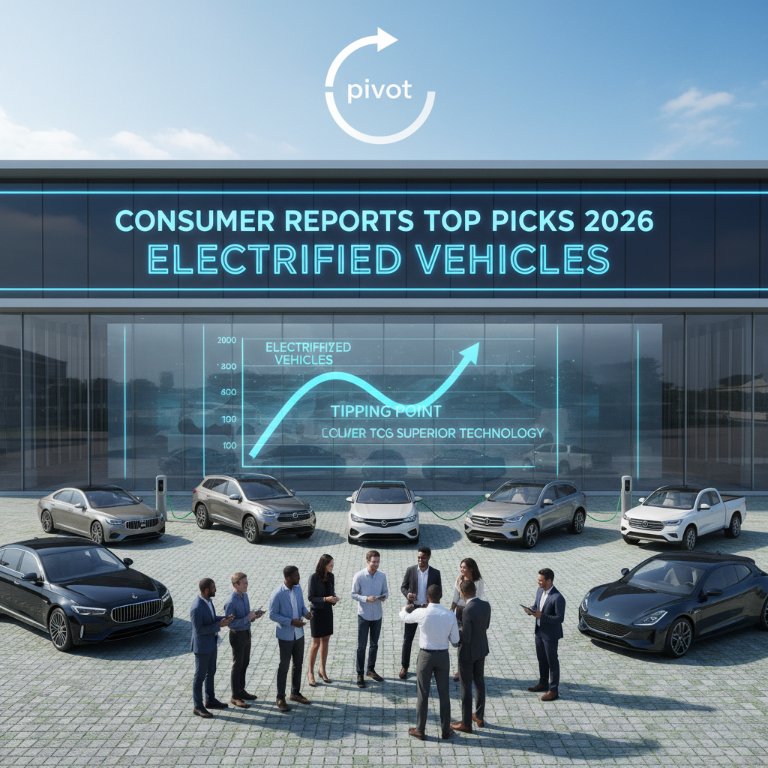
The automotive landscape has reached an undeniable tipping point, as Consumer Reports (CR), the venerable arbiter of consumer trust, has released its 2026 Top Picks list, featuring an unprecedented and exclusive lineup of electrified vehicles. For the first time in its storied history, CR's coveted recommendations are devoid of a single pure internal combustion engine (ICE) car, a seismic announcement that signals a definitive end to the ICE era as the default powertrain for consumer excellence. This isn't merely a majority; it's a unanimous endorsement, underscoring a fundamental realignment of automotive value.
This momentous declaration from an organization renowned for its rigorous testing and impartiality resonates deeply within the industry. It's a stark validation of what many industry analysts and EV proponents have championed for years: electrified vehicles – encompassing hybrids, plug-in hybrids (PHEVs), and battery electric vehicles (BEVs) – now unequivocally deliver a superior overall ownership experience. This shift isn't a speculative forecast; it's a present-day reality, quantified and affirmed by one of the most trusted consumer authorities.
The Irrefutable Case for Electrified Excellence
Consumer Reports' exhaustive evaluations consistently highlight several key advantages that have propelled electrified vehicles to the forefront:
- Superior Technology and Performance: Electrified powertrains, particularly BEVs, offer instant torque, smoother acceleration, and significantly quieter operation compared to their ICE counterparts. Modern hybrids and PHEVs also demonstrate remarkable refinement, seamlessly blending electric and gasoline power for optimal efficiency and responsiveness. This technological leap translates directly into a more sophisticated and enjoyable driving experience, setting a new benchmark for automotive performance and comfort.
- Lower Total Cost of Ownership (TCO): Despite often higher upfront costs, the long-term economic benefits of electrified vehicles are becoming undeniable. Owners consistently report significant savings on fuel, as electricity is generally cheaper per mile than gasoline, and hybrids dramatically reduce fuel consumption. Furthermore, BEVs, with fewer moving parts, typically require less maintenance, translating into lower servicing costs over the vehicle's lifespan.
- Evolving Consumer Perception: The narrative around ICE vehicles is rapidly shifting. Once the undisputed king, the pure gasoline-powered car is increasingly perceived as a 'dead-end ecosystem'. Consumers are now keenly aware of the environmental impact, regulatory pressures, and the relative lack of future-proofing inherent in internal combustion technology. This evolving perception is driving demand towards more sustainable and technologically advanced alternatives.
Why This Matters: The Dawn of a New Automotive Epoch
Consumer Reports' 2026 Top Picks are more than just a list of recommended cars; they are a powerful market signal, an unequivocal endorsement that the future of personal mobility is electric. This pivotal moment will have profound implications across the entire automotive value chain:
- Winners: Consumers stand to gain significantly, benefitting from more advanced, efficient, and ultimately more enjoyable vehicles with lower running costs. Forward-thinking automakers who have heavily invested in EV and electrification platforms, such as Tesla, BYD, and many traditional players who pivoted early, will see their strategies validated and their market share grow. The electrification infrastructure industry, including charging networks and battery manufacturers, will experience accelerated growth and investment.
- Losers: This announcement delivers a severe blow to legacy automakers still heavily reliant on ICE vehicle sales, particularly those with underdeveloped or uncompetitive electrification strategies. The 'dead-end ecosystem' label attached to ICE cars suggests diminishing resale values over time and increasing regulatory pressure, making it harder to justify new investments in pure combustion technology. Dealerships primarily focused on ICE service and sales models will need to rapidly adapt or face significant challenges.
- Market Signal: This represents an irreversible inflection point. The market is now being told, in no uncertain terms, that electrification is the benchmark for quality, reliability, and value. This will likely accelerate R&D spending on battery technology, charging solutions, and advanced electric platforms, further widening the gap between electrified and ICE vehicles. It's a clear mandate for the industry: electrify or face obsolescence.
This landmark decision by Consumer Reports marks a definitive end to the internal combustion engine's undisputed reign. The transition to an electrified future is no longer a distant vision but a present-day reality, confirmed by the very institution consumers trust most. As we move forward, automakers that fail to embrace this electric paradigm shift risk being left in the rearview mirror, as the road ahead is clearly paved with Watts, not gallons.