Connecticut's Proposed EV Fee Hike Ignites Outcry, Threatening State's Green Goals
Connecticut's burgeoning electric vehicle (EV) community is in an uproar, vehemently opposing a proposed legislative measure, House Bill 5568 (HB 5568...
Editorial Team
World Of EV
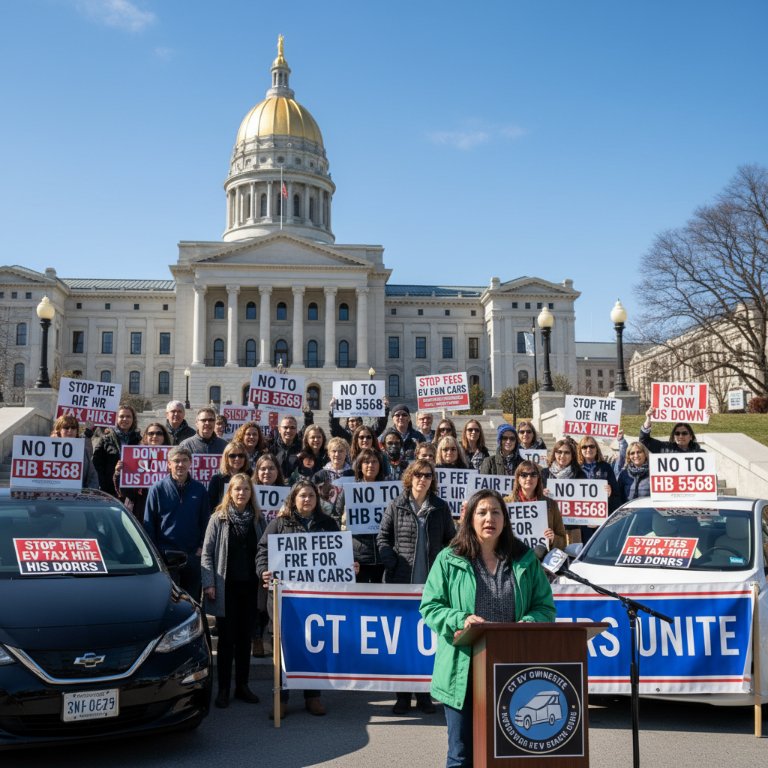
Connecticut's burgeoning electric vehicle (EV) community is in an uproar, vehemently opposing a proposed legislative measure, House Bill 5568 (HB 5568), that would significantly inflate their state registration fees. The bill, currently under consideration by the state's General Assembly, aims to address a projected shortfall in the Special Transportation Fund. However, EV owners and environmental advocates argue that this aggressive fee increase is not only unjust but also a regressive step that could derail the state's progress toward a cleaner transportation future.
This isn't merely a debate over a few dollars; it's a critical juncture for Connecticut's commitment to electrification. While many states grapple with the evolving landscape of road funding in an era of declining gasoline tax revenue, Connecticut's proposed solution stands out for its dramatic impact on EV and plug-in hybrid electric vehicle (PHEV) owners. The controversy highlights a growing tension between the immediate need to fund infrastructure and the long-term imperative to incentivize sustainable technologies.
The Stark Reality of HB 5568
The specifics of HB 5568 reveal a substantial burden on EV and PHEV owners. Under current regulations, a standard vehicle registration in Connecticut costs $120 for a three-year period. The proposed bill, slated to take effect on October 1, 2026, would dramatically alter this structure for electrified vehicles:
- Battery Electric Vehicles (BEV), Fuel Cell Electric Vehicles (FCEV), and Range-Extended Electric Vehicles (EREV): A proposed fee of $345 for three years. This represents a nearly threefold increase over the current standard registration fee.
- Plug-in Hybrid Electric Vehicles (PHEV): These vehicles would see their three-year registration fee rise to $233.
The immediate backlash from organizations like the EV Club of CT and the CT League of Conservation Voters has been swift and severe. They contend the bill is 'simply unfair' and would create 'significant financial hardship' for consumers Connecticut is ostensibly trying to encourage into cleaner transportation.
A Flawed Justification and Broader Context
The rationale behind HB 5568 is to bolster the state's Special Transportation Fund (STF), which finances crucial transportation infrastructure projects. Proponents argue that as EV owners don't pay gasoline taxes, they aren't contributing their fair share to road maintenance. However, opponents offer a compelling counter-narrative:
- Exaggerated Impact: Electric vehicles currently constitute a mere 3.2% of Connecticut's total light-duty vehicle fleet, with BEVs accounting for just 2%. This small percentage means their impact on the STF's revenue stream is minimal at present.
- No Immediate Crisis: The STF is currently in surplus, with deficits only projected in approximately five years. This suggests the proposed fee hike is a premature and drastic measure rather than an urgent necessity.
- Overlooked Revenue Issues: The actual drivers of the STF's projected shortfall are more complex, stemming from factors like improved fuel efficiency of internal combustion engine (ICE) vehicles, and the state legislature's past decisions, such as not indexing gas taxes to inflation and implementing a gas tax holiday in 2022.
- Existing Contributions: EV owners already contribute significantly through sales tax on the higher purchase premium of their vehicles and pay sales tax on public charging, unlike gasoline, which is exempt. Furthermore, Connecticut offers rebates through the CHEAPR program, but the standard BEV incentive has notably decreased.
Nationally, at least 41 states have implemented special registration fees for EVs to offset declining gas tax revenues. These fees vary widely, from around $50 annually in states like Colorado and Hawaii to a high of $290 in New Jersey by 2028. While many states are seeking solutions, Connecticut's proposed tripling of fees is particularly aggressive and stands out in its potential to actively discourage EV adoption rather than seeking a balanced approach to revenue generation. Studies suggest that even a $100 fee can reduce EV demand by 10%.
Why This Matters:
HB 5568 is more than just a fiscal adjustment; it's a critical stress test for Connecticut's environmental leadership and its commitment to an electrified future. This bill signals a potential retreat from the state's clean transportation goals and carries significant long-term implications.
- A Chilling Effect on EV Adoption: Imposing such a substantial fee increase risks reversing the momentum of EV adoption in Connecticut. Prospective buyers, already facing higher upfront costs for EVs, will see an additional disincentive, potentially pushing them back towards gasoline-powered vehicles. This directly undermines the state's efforts to improve air quality and reduce carbon emissions.
- Fairness and Early Adopters: The burden disproportionately falls on early EV adopters who, in many cases, made a conscious decision to invest in cleaner technology, often at a premium, with the understanding of state support or at least equitable treatment. Penalizing these pioneers sends a discouraging message to those considering the switch.
- Damage to Connecticut's Green Image: As a state that has previously offered incentives and worked to build charging infrastructure, this bill could severely tarnish Connecticut's reputation as an EV-friendly environment. This could impact future private investment in charging networks and limit the state's influence in broader climate initiatives.
- A Broader Policy Failure: The fact that the STF's long-term solvency is being addressed through such a narrow and contentious tax on a nascent segment of the vehicle market points to a broader failure in designing a sustainable and equitable transportation funding model for the 21st century. It allows the legislature to avoid tackling more systemic issues like gas tax indexation or exploring mileage-based user fees.
This is a critical moment for Connecticut. The outcome of HB 5568 will not only determine the financial landscape for current and future EV owners but will also send a clear signal about the state's true priorities regarding climate action and sustainable transportation.
Connecticut's legislature faces a crucial decision: to implement a short-sighted and potentially counterproductive fee hike or to engage in a more comprehensive and equitable reimagining of its transportation funding mechanisms. A truly sustainable solution would recognize the environmental and economic benefits of EVs while ensuring all road users contribute fairly, without stifling the transition to a cleaner future.