Chinese EV Tsunami Reshapes European Market as Tesla Sales Plummet
Europe's electric vehicle landscape is undergoing a seismic transformation, as an unrelenting surge of Chinese-made EVs captures significant market sh...
Editorial Team
World Of EV
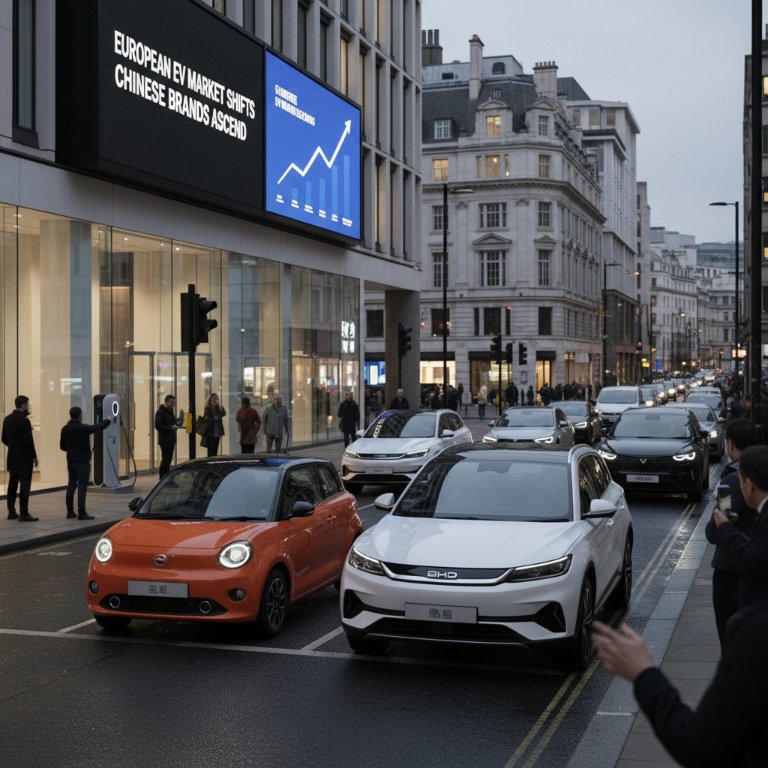
Europe's electric vehicle landscape is undergoing a seismic transformation, as an unrelenting surge of Chinese-made EVs captures significant market share, forcing established players to re-evaluate their strategies. This aggressive market penetration, driven primarily by highly competitive pricing, marks a pivotal moment, with even market leader Tesla experiencing a dramatic decline in sales across the continent.
For years, European consumers have embraced electric vehicles with enthusiasm, often gravitating towards established Western brands. However, the paradigm is shifting rapidly. Chinese automakers, spearheaded by formidable players like BYD, are making substantial inroads, particularly in key markets such as the United Kingdom. In a stunning display of growth, Chinese brands accounted for 13% of new car registrations in the UK, effectively doubling their market share within a single year.
The Price Advantage Driving Adoption
The most compelling factor behind this rapid adoption is undoubtedly pricing. Chinese electric vehicles are entering the market with average starting prices ranging from a highly attractive €30,000 to €45,000, with even smaller models pushing those figures lower. This stands in stark contrast to the average European EV, which typically commands prices closer to €50,000. For price-sensitive consumers and those seeking accessible entry points into EV ownership, the value proposition from China is simply too compelling to ignore. This affordability isn't just about lower sticker prices; it often includes a strong suite of standard features, further enhancing their appeal.
Tesla's European Retreat
While Tesla has long been the dominant force in the premium EV segment, setting benchmarks for performance and technology, the influx of Chinese competitors is presenting a formidable challenge. The consequence has been stark: Tesla's European sales have declined by over 40% year-on-year. This isn't merely a blip; it signals a fundamental shift where the novelty of the Tesla brand is now being directly challenged by a new wave of value-driven, technologically advanced, and increasingly stylish alternatives. Historically, Tesla's primary competition came from legacy automakers adapting to EVs; now, it faces a lean, agile, and cost-efficient challenger from the East that is directly targeting the mass market segments where Tesla aimed to expand.
Why This Matters:
This dramatic shift is more than just a passing trend; it signals a fundamental reordering of the global automotive power structure with profound implications for all stakeholders:
- For European Consumers: This is overwhelmingly positive. The increased competition ensures greater choice, accelerates innovation, and most crucially, drives down prices for electric vehicles. What was once a premium purchase is becoming increasingly accessible.
- For Chinese Automakers: This is a monumental victory, validating their long-term investment in electric vehicle technology and manufacturing. Brands like BYD are establishing a foothold that will be incredibly difficult to dislodge, setting the stage for global expansion beyond Europe.
- For Traditional European Automakers: This represents a grave challenge. Already struggling with the complexities of the EV transition, they now face intense pressure to rapidly innovate, reduce production costs, and bring competitive models to market at price points that can rival the Chinese offerings. Their established dealer networks and brand loyalty are formidable assets, but they may not be enough if the price gap remains significant. This could force them into uncomfortable strategic alliances or even painful restructuring.
- For Tesla: The European market decline highlights a vulnerability. While still a leader, their pricing strategy and product portfolio are being aggressively undercut. Tesla will need to innovate faster, potentially introduce more affordable models, or significantly differentiate its software and charging infrastructure to maintain its competitive edge in key markets.
- Geopolitical Implications: Europe's acknowledgment of 'controlled cooperation' with Chinese firms in critical sectors like EV batteries underscores the strategic reliance and intertwined future of these regions. It suggests a a pragmatic approach to ensuring supply chain stability while also hinting at a potential balancing act to protect domestic industries from being completely overwhelmed.
The swift rise of Chinese EVs in Europe is undeniable proof that the global automotive landscape is irrevocably changing. This isn't merely about new cars on the road; it's about a redefinition of value, a recalibration of market power, and a clarion call for established manufacturers to adapt or risk being left behind in the electrifying race for the future.