Charging Ahead to Nowhere? China's EV Network Faces Profitability Crisis Amidst Vicious Price War
China, the undisputed global leader in electric vehicle adoption and manufacturing, finds itself at a critical crossroads in the very infrastructure d...
Editorial Team
World Of EV
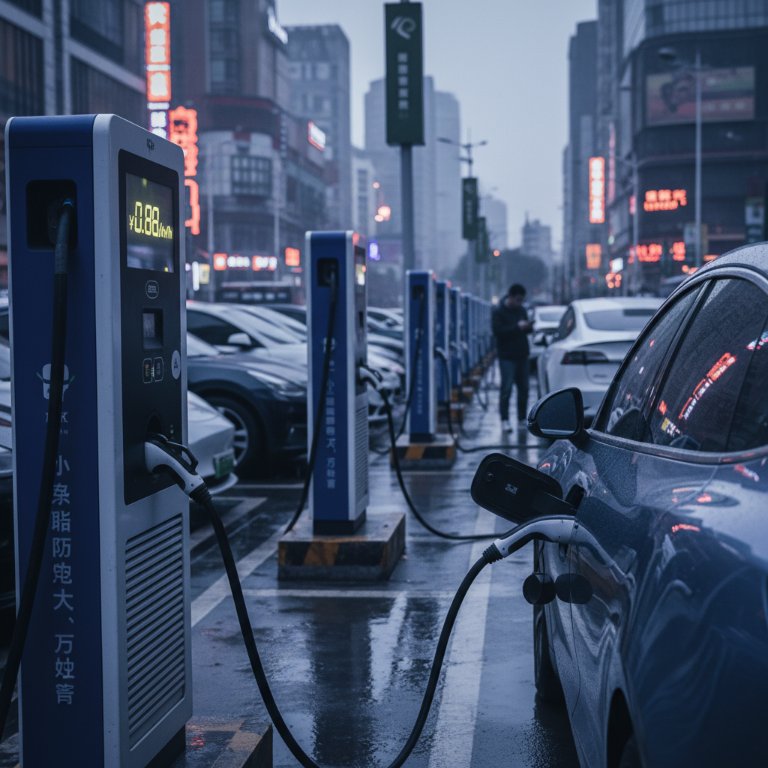
China, the undisputed global leader in electric vehicle adoption and manufacturing, finds itself at a critical crossroads in the very infrastructure designed to fuel its EV revolution. Despite boasting the world's largest EV charging network, the sector is currently embroiled in a fierce 'price war,' systematically eroding profitability for operators and raising significant concerns about the long-term health of the industry. This isn't merely a minor market correction; it’s a systemic challenge threatening the stability of a crucial pillar of the EV ecosystem.
The Unprofitable Paradox of Scale
The scale of China's EV infrastructure is staggering, a testament to rapid deployment and a clear commitment to electrification. However, a recent CCTV report highlighted a deeply troubling paradox: this immense network, far from guaranteeing success, has become the battleground for a brutal price war. An influx of new players, eager to capitalize on the EV boom, has led to cutthroat competition, turning what should be a burgeoning market into a zero-sum game. Industry insiders openly lament that running charging stations in China has become an unprofitable endeavor, a stark contrast to the initial promise of a lucrative new industry. This 'race to the bottom' directly undermines the financial viability of existing operators and deters potential new investment, creating a cycle of declining returns.
A Race to the Bottom: Quality Concerns Loom
The immediate consequence of this intense price competition is a direct assault on profitability, but the ripple effects extend far beyond balance sheets. As operators desperately try to undercut competitors, the focus invariably shifts from service quality to cost reduction. This unsustainable model has prompted urgent calls within the industry to pivot away from pure price competition and prioritize service quality to restore investor confidence and, critically, enhance user experience. The concern isn't just about the charging station owners; the price war is also significantly impacting the upstream supply chain. There's a growing fear that incessant cost-cutting demands could compromise the quality and reliability of charging equipment and components, jeopardizing the long-term competitiveness and safety standards of the entire sector.
Why This Matters:
This crisis in China's EV charging sector is far more than a localized business problem; it carries profound implications for consumers, investors, and the global EV industry.
- For the Savvy EV Enthusiast and Prospective Buyer: While lower charging prices might seem like an immediate win, the long-term consequences are dire. A lack of profitability leads to underinvestment in maintenance, upgrades, and expansion. This translates directly to less reliable chargers, slower charging speeds, and a suboptimal user experience. Imagine planning a long trip only to find critical chargers out of service or charging at a snail's pace due to cost-cutting on components. The allure of EVs hinges on a seamless charging experience; this price war threatens to erode that foundational promise.
- For Operators and Investors: This is a clear signal that unbridled expansion without a sustainable business model is a recipe for disaster. The market needs consolidation, innovation in service offerings, and possibly regulatory intervention to establish fair pricing floors or quality standards. For investors, the current environment signals extreme risk, dampening future capital inflows precisely when continuous investment is needed for technological advancement and network robustness.
- For the Global EV Ecosystem: China's challenges serve as a potent cautionary tale. As other nations rapidly expand their EV charging infrastructure, the pitfalls of a purely price-driven market become evident. The goal must be to build a resilient, profitable, and high-quality charging network that can sustainably support the transition to electric mobility. If the world's largest EV market cannot make its charging profitable, it raises critical questions about the viability of similar models elsewhere.
Conclusion:
The current price war in China's EV charging sector is a critical juncture. The industry must collectively shift its focus from a destructive race to the bottom to a sustainable model built on quality, reliability, and superior user experience. Failure to do so risks undermining consumer confidence, stifling innovation, and ultimately hindering the long-term growth and stability of the entire electric vehicle market, both in China and potentially worldwide. The future of EV adoption is inextricably linked to a robust and profitable charging infrastructure; navigating this challenge successfully will define the next era of electric mobility.