Canada's EV Transition Hits a Fiscal Pothole: Federal Incentives Clashed by Nova Scotia's New 'Road Tax'
As Canada pushes aggressively towards a zero-emission vehicle future, a recent policy clash between federal incentives and a new provincial levy in No...
Editorial Team
World Of EV
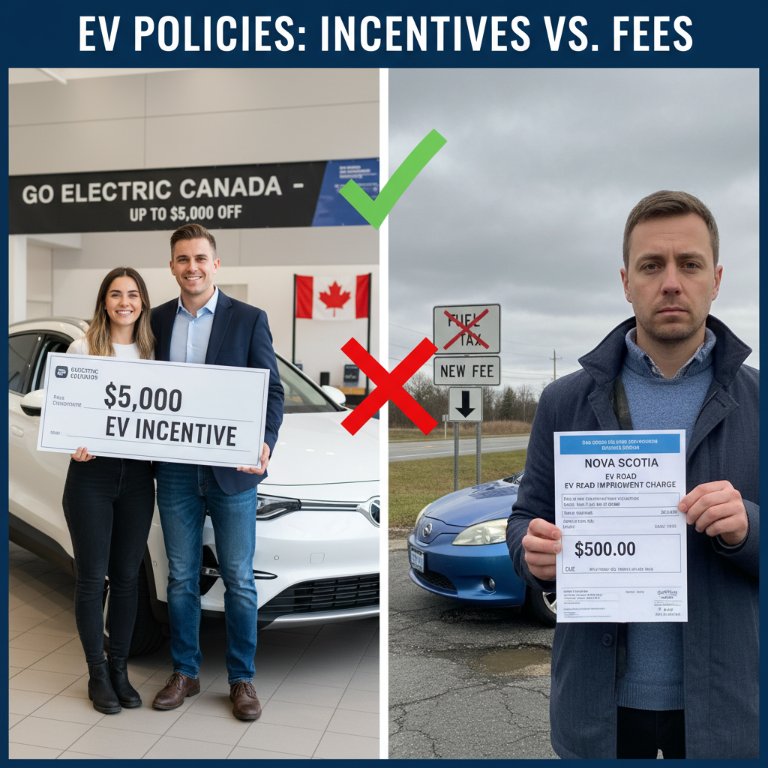
As Canada pushes aggressively towards a zero-emission vehicle future, a recent policy clash between federal incentives and a new provincial levy in Nova Scotia sends confusing signals to prospective EV owners. While Ottawa continues to sweeten the deal with significant rebates, Nova Scotia has introduced a controversial new fee, raising questions about the true commitment to decarbonization and the future of EV adoption across the nation.
Federal Fueling the EV Fire
The Canadian federal government remains a steadfast proponent of electric vehicle adoption, actively deploying robust incentives designed to accelerate the transition away from internal combustion engines. Prospective buyers can tap into substantial rebates, with battery electric vehicles (BEVs) qualifying for up to $5,000 and plug-in hybrid electric vehicles (PHEVs) receiving up to $2,500. These incentives are crucial in mitigating the higher upfront cost often associated with EVs, making them a more financially accessible option for a broader demographic. This strategy aligns with Canada's ambitious climate targets, aiming to reduce greenhouse gas emissions and foster a cleaner transportation ecosystem.
Nova Scotia's Unpopular 'Road Tax' Emerges
In stark contrast to federal efforts, Nova Scotia's recent budget introduces a novel and contentious fee targeting low-emission vehicles. Starting today, electric vehicle owners in the province will face a $500 levy, while hybrid owners will incur a $250 charge. This fee is not a one-time expense but a recurring obligation, payable every two years. Provincial officials defend this policy, asserting that it ensures EV and hybrid owners contribute their 'fair share' to road maintenance and infrastructure upkeep, paralleling the contributions made by gasoline-reliant drivers through fuel taxes. This justification, however, has ignited a firestorm of criticism from environmental advocates and EV proponents alike.
The 'Fair Share' Argument: A Double-Edged Sword?
The premise behind Nova Scotia's new levy attempts to address a legitimate long-term concern: as more vehicles electrify, fuel tax revenues, a primary source for road infrastructure funding, will inevitably decline. However, critics argue that penalizing early adopters of environmentally friendly technology is counterproductive and short-sighted. This move directly contradicts the spirit of federal incentives and effectively creates a financial disincentive where encouragement is paramount. Such a policy risks stifling the nascent EV market in Nova Scotia, potentially slowing the province's progress towards emission reduction goals and undermining the very individuals who are actively choosing to reduce their carbon footprint.
Why This Matters:
A Confusing Consumer Signal: For the average Canadian consumer, particularly those in Nova Scotia, the message is muddled. On one hand, the federal government offers a carrot; on the other, the provincial government brandishes a stick. This uncertainty can deter potential EV buyers, causing them to reconsider their purchase decisions or opt for less eco-friendly alternatives.
The Future of Funding: While the need for sustainable road funding is valid, Nova Scotia's approach sets a concerning precedent. It suggests that provinces may prioritize immediate revenue generation over fostering green technology adoption. This could lead to a patchwork of disparate provincial policies, complicating the national EV rollout and creating an uneven playing field for consumers and manufacturers.
Who Wins, Who Loses? Nova Scotia's provincial coffers stand to gain from the new levy, providing a direct revenue stream for infrastructure. However, the biggest losers are unequivocally the prospective EV and hybrid owners in the province, who now face an added recurring cost. The broader environmental movement also loses momentum, as a barrier to emission reduction is erected. The EV industry itself could see slower adoption rates in regions implementing similar taxes, impacting sales targets and investment.
A Call for Cohesion: This situation underscores the critical need for greater policy alignment between different levels of government. A successful national EV transition demands a unified strategy that supports, rather than hinders, consumer adoption and technological advancement. Without it, Canada risks undermining its own ambitious climate targets and falling behind global leaders in the electric mobility race.
The juxtaposition of federal EV incentives and Nova Scotia's new biannual levy highlights a significant policy disconnect within Canada's drive for electrification. While addressing future road maintenance funding is a necessary discussion, doing so by directly taxing low-emission vehicles at this critical juncture sends a counterproductive message. For Canada to truly accelerate its EV transition, a harmonized and supportive policy framework across all levels of government is not just beneficial, but absolutely essential to ensure a smooth road ahead for electric mobility.