Canada's EV Dream Faces Reality Check: Consumers Pump Brakes on Purchases Amid Cost and Charging Concerns
The road to an all-electric future in Canada has hit a significant speed bump, as a new report from EY Canada reveals a concerning recalibration in co...
Editorial Team
World Of EV
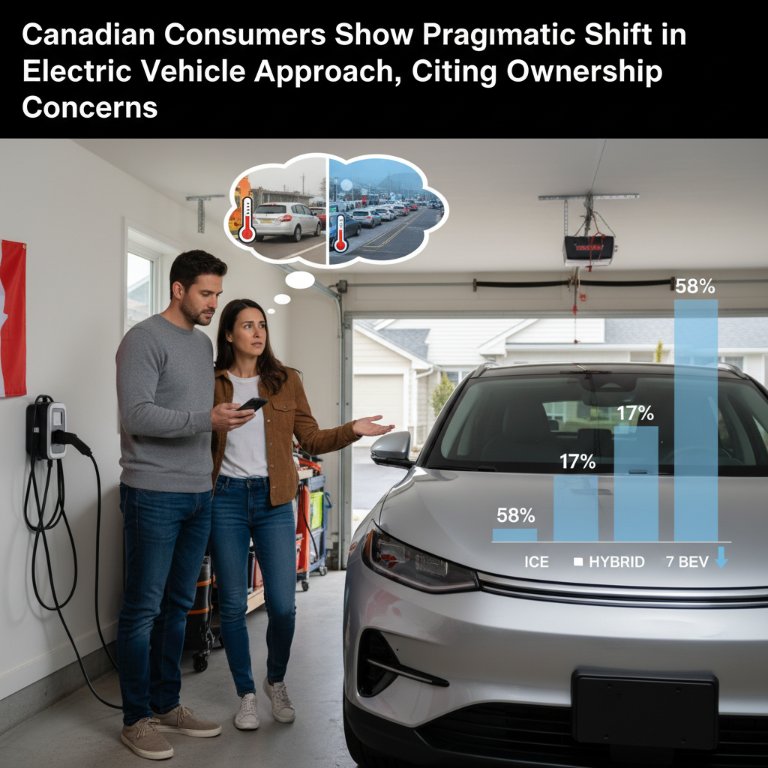
The road to an all-electric future in Canada has hit a significant speed bump, as a new report from EY Canada reveals a concerning recalibration in consumer sentiment. Far from an unbridled acceleration towards EVs, a substantial 30% of potential electric vehicle buyers have recently reconsidered or postponed their purchase decisions. This isn't merely a pause; it signals a critical moment for the industry, as consumers prioritize practical realities over early-adopter enthusiasm.
This shift highlights growing anxieties around the high cost of EVs, persistent concerns about charging reliability, and the overall day-to-day ownership experience. The consequence is a noticeable retreat to more familiar and seemingly safer options, with preference for internal combustion engines (ICE) surging to 58% and hybrids gaining traction at 17%. Conversely, Battery Electric Vehicle (BEV) preference has fallen sharply to a mere 7% – a stark contrast to the once-projected rapid adoption rates.
The Data Don't Lie: A Market Correction in Progress
The EY Canada report paints a clear picture: the honeymoon phase for electric vehicles in the Canadian market is over. Early adopters, often driven by environmental consciousness or a desire for cutting-edge technology, paved the way. However, as the market attempts to broaden its appeal to mainstream buyers, it encounters a different set of priorities.
- 30% of potential EV buyers have postponed or reconsidered their purchase. This significant churn indicates a loss of confidence or an increase in practical barriers.
- 58% preference for ICE vehicles. The traditional gasoline-powered car, long thought to be on a rapid decline, finds renewed favor as consumers weigh established reliability and lower upfront costs.
- 17% preference for hybrids. Hybrids, once seen as a transitional technology, are now emerging as a compelling middle ground, offering improved fuel economy without the charging infrastructure concerns of pure EVs.
- 7% preference for BEVs. This drastic drop in preference underscores the challenges the EV sector faces in convincing a broader audience.
Unpacking Consumer Concerns: The Barriers to Adoption
The report identifies three primary pain points driving this market correction, each demanding immediate and strategic attention from automakers, charging providers, and policymakers.
Cost: Beyond the sticker price, which remains a significant barrier for many, consumers are evaluating the total cost of ownership more critically. High interest rates, insurance premiums, and the perceived cost of battery replacement or specialized maintenance contribute to this financial apprehension. For many, the premium for an EV no longer justifies the perceived benefits, especially when weighed against escalating living costs.
Charging Reliability: Range anxiety is evolving into 'charging anxiety.' It's no longer just about how far an EV can go, but the confidence in finding a functional, fast, and available charging station when needed. Issues like broken chargers, slow charging speeds, network incompatibilities, and the sheer lack of infrastructure in certain regions of Canada – particularly outside major urban centers and in colder climates where charging can be less efficient – are major deterrents.
Overall Day-to-Day Ownership Experience: This broad category encompasses everything from software glitches and dealer service readiness to winter performance and the learning curve associated with EV ownership. Consumers expect a seamless, hassle-free experience, and any friction points can quickly erode confidence in a relatively new technology.
Why This Matters:
Who Wins? Traditional automakers with robust hybrid portfolios, such as Toyota, Honda, and Hyundai-Kia, are poised to benefit significantly. Their proven, cost-effective hybrid offerings directly address consumer anxieties around charging and range, providing a sensible stepping stone to electrification. Furthermore, manufacturers who can swiftly pivot to offering genuinely affordable and reliable BEVs, coupled with strong after-sales support and accessible charging solutions, will gain a crucial competitive edge. This also gives a temporary reprieve to the ICE market, allowing it to maintain relevance longer than previously anticipated.
Who Loses? Pure-play EV startups that struggle with economies of scale, profitability, and developing comprehensive charging ecosystems face intensified pressure. Their business models, often predicated on rapid, high-volume growth, will be tested by a more discerning and hesitant market. Governments and utility providers who have focused solely on EV purchase incentives without concurrently investing in robust, reliable charging infrastructure also face a backlash, as their strategies prove incomplete.
What This Signals to the Market: This isn't the death knell for EVs, but rather a vital recalibration. The market is maturing, moving past the early adopter phase into the mainstream. Mainstream buyers demand practicality, affordability, and reliability above all else. This report underscores that the EV transition requires a holistic approach, addressing not just vehicle technology but also infrastructure, cost parity, and a seamless ownership experience. It signals a shift from simply 'building it and they will come' to 'building it right, and providing comprehensive support.' The industry must now focus on solving real-world consumer pain points rather than merely chasing range figures or performance metrics.
Is This a 'Do-or-Die' Moment? For some, absolutely. Automakers who fail to heed these warnings and continue to push expensive, charging-dependent EVs without a robust support ecosystem risk alienating a significant portion of the buying public. This could lead to stagnating sales, excess inventory, and ultimately, a loss of market share to more agile competitors who adapt to consumer demands. The next few years will differentiate the truly resilient and customer-focused players from those who underestimated the complexities of mainstream EV adoption.
In conclusion, the EY Canada report serves as a wake-up call for the EV industry. While the long-term trajectory towards electrification remains, the path is proving more challenging than initially anticipated. Addressing cost barriers, ensuring reliable charging infrastructure, and enhancing the overall ownership experience are no longer optional extras but fundamental requirements for unlocking widespread EV adoption in Canada and beyond. The future of EVs hinges on the industry's ability to listen, adapt, and deliver practical, compelling solutions for the everyday driver.