California's EV Investment Delivers Tangible Riches: Thousands in Savings for Drivers and Fleets
California's unwavering commitment to fostering a clean transportation ecosystem is now yielding substantial, measurable financial benefits for its re...
Editorial Team
World Of EV
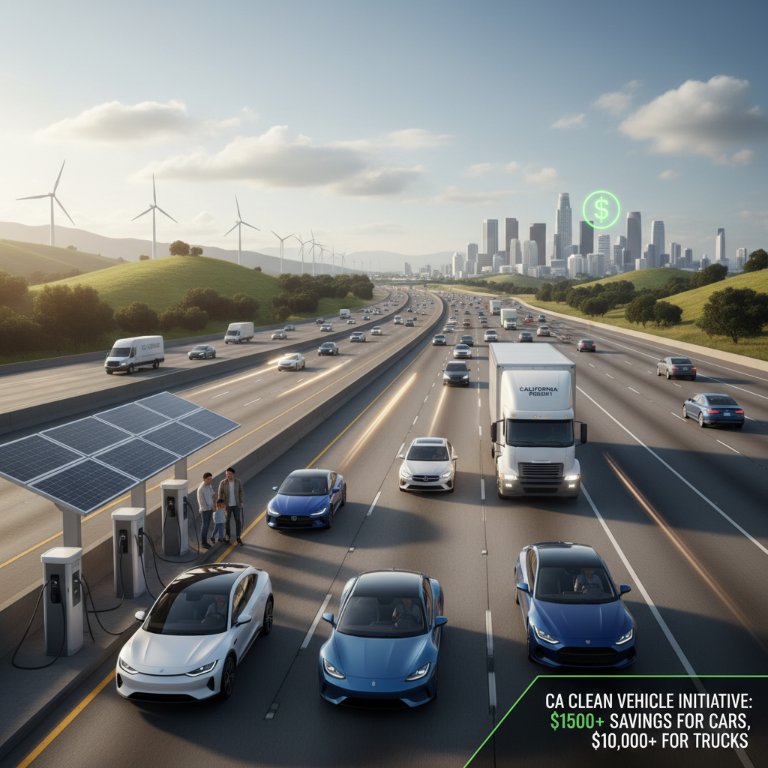
California's unwavering commitment to fostering a clean transportation ecosystem is now yielding substantial, measurable financial benefits for its residents and businesses. Far from merely a future promise, the Golden State's strategic investments in clean vehicles are translating directly into significant cost savings, particularly in critical areas like fuel and maintenance, cementing the economic case for electrification.
After years of pioneering aggressive emission standards and offering robust incentives, California's visionary policies are now paying dividends. This isn't just about reducing smog; it's a profound economic shift, proving that environmental leadership can go hand-in-hand with direct financial advantages for consumers and the commercial sector.
Driving Down Costs: Passenger Vehicles Lead the Charge
For the everyday Californian, the transition to an electric passenger vehicle is proving to be a smart financial decision. A recent report highlights that EV owners in the state can anticipate savings of up to $1,500 over the lifetime of their vehicle in combined fuel and maintenance costs. This figure underscores a critical point often overlooked by prospective buyers: while the upfront cost of an EV can sometimes be higher, the operational expenses consistently provide a compelling long-term return on investment. With fluctuating gasoline prices and the inherent simplicity of EV powertrains requiring less routine maintenance, these savings represent a significant boost to household budgets.
Heavy-Duty Haulers: A Fleet-Sized Financial Shift
The economic impact extends dramatically into the commercial sector, where the scale of operations amplifies the benefits. Operators of heavy-duty electric trucks in California are realizing truly transformative savings, with the potential for tens of thousands of dollars saved per vehicle. For fleet managers and logistics companies, these savings are not merely incremental; they directly impact the bottom line, enhancing competitiveness and offering a compelling incentive to accelerate the electrification of their entire fleets. Reduced downtime due to simpler maintenance schedules further sweetens the deal, maximizing asset utilization and operational efficiency.
Beyond the Wallet: Broader Societal and Economic Gains
The state's proactive approach to clean vehicles extends beyond individual and corporate finances, delivering widespread societal benefits:
- Healthier Air: Reduced tailpipe emissions directly translate to improved air quality, leading to better public health outcomes and lower healthcare costs.
- Lower Transportation Costs: Systemic shifts towards more efficient, electrified transport reduce overall economic burdens associated with moving people and goods.
- Expanded Consumer Choice: A thriving EV market driven by incentives and infrastructure investment offers consumers a wider array of vehicle options.
- Sustained Economic Momentum: The burgeoning EV sector fosters job creation, encourages technological innovation, and positions California as a global leader in the green economy.
Why This Matters:
This news isn't just a validation of California's environmental policies; it's a powerful and undeniable signal to the entire automotive industry and policymakers worldwide. The long-held perception that environmental initiatives come at an economic cost is being definitively overturned. Who wins? Certainly, EV owners and fleet operators in California are direct beneficiaries, putting real money back into their pockets. The state's residents also win through cleaner air and a more robust green economy. Furthermore, this provides a clear blueprint for other states and nations contemplating their own EV transitions, demonstrating that targeted investments yield tangible, positive financial returns.
Who loses? Perhaps traditional internal combustion engine (ICE) vehicle manufacturers who are slow to adapt, as the economic advantages of EVs become too significant to ignore. The fossil fuel industry also faces long-term challenges as demand for gasoline and diesel inevitably declines. This moment signals that the EV transition has moved past its nascent stage of purely environmental altruism and entered a phase of undeniable economic practicality. It's not just about doing good; it's about doing smart business and saving money. This is a 'do-or-die' moment for any company or region not actively planning for an electrified future; the financial incentives are now too strong to be dismissed as niche.
California's success provides a compelling narrative: strategic investment in clean transportation yields not just environmental improvements, but also substantial and demonstrable financial gains for its citizens and economy. As these savings continue to accrue, the Golden State sets a formidable precedent, urging other regions to accelerate their own transitions and unlock the dual benefits of a cleaner, more prosperous future.