California Unveils $200 Million EV Incentive for First-Time Buyers: A Game Changer for Market Adoption
California Governor Gavin Newsom has proposed a substantial $200 million incentive program, targeting first-time electric vehicle buyers across the Go...
Editorial Team
World Of EV
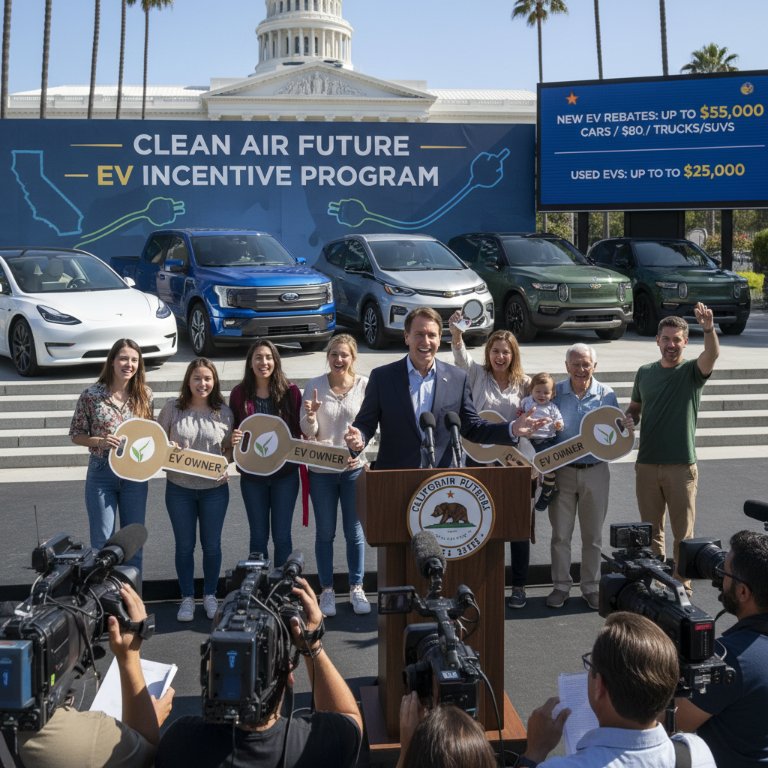
California Governor Gavin Newsom has proposed a substantial $200 million incentive program, targeting first-time electric vehicle buyers across the Golden State. This initiative, if approved by lawmakers, aims to significantly accelerate EV adoption by offering point-of-sale rebates, directly addressing one of the biggest hurdles for new electric car owners: upfront cost. This move solidifies California's position as a driving force in the nation's—and indeed, the world's—transition to sustainable transportation, especially in the wake of shifting federal policies.
California has historically led the charge in EV mandates and incentives, consistently pushing for stricter emissions standards and supporting the burgeoning EV market. While the state has allocated over $1.9 billion through various programs since 2010, previous efforts, such as the Clean Vehicle Rebate Program (CVRP), have sometimes skewed towards affluent buyers. This new proposal appears designed to cast a wider net, focusing on accessibility and immediate financial relief at the dealership, a critical factor for mainstream consumers.
California's Bold New EV Push
The proposed program outlines clear guidelines for eligibility, emphasizing affordability and broad appeal:
- Passenger Vehicles: Incentives will apply to models priced up to $55,000.
- SUVs, Pickup Trucks, and Vans: These larger segments, increasingly popular with American families, will qualify for rebates if priced up to $80,000.
- Used EVs: A crucial inclusion, used electric vehicles up to $25,000 will also be eligible, directly tackling the affordability barrier for many prospective buyers.
- Point-of-Sale Rebates: Unlike tax credits that require waiting until tax season, these immediate rebates function as a direct discount at the time of purchase, a method studies show consumers overwhelmingly prefer.
- Manufacturer Matching Funds: Notably, the program requires participating automakers to contribute matching incentives, further amplifying the financial benefit for consumers.
Targeting the First-Time Buyer
The strategic focus on first-time EV buyers is a deliberate attempt to expand the market beyond early adopters. According to the California Air Resources Board (CARB), limiting eligibility to first-time Zero-Emission Vehicle (ZEV) buyers helps introduce new consumers to EV technology, as research suggests that once drivers switch to ZEVs, they typically do not revert to gasoline or or diesel vehicles. This approach is particularly relevant given the recent cessation of some federal EV tax credits, which has led to a noticeable slowdown in EV sales in the final quarter of 2024.
Why This Matters:
This $200 million injection is far more than just another rebate program; it's a strategic maneuver poised to reshape California's—and by extension, the national—EV landscape. The implications are significant for consumers, manufacturers, and the broader market.
- Who Wins? First and foremost, the Californian consumer stands to gain immensely. The immediate point-of-sale rebate lowers the entry barrier for EV ownership, particularly for the middle class and those in disadvantaged communities who have historically had less access to such incentives. Major manufacturers like Tesla, Ford, General Motors, and Rivian, with models fitting the price caps, are clear beneficiaries, as the program is designed to directly boost demand. The inclusion of used EVs is a progressive step that creates a more robust secondary market, a vital component for long-term mass adoption. California itself wins by reinforcing its climate goals and maintaining its leadership in clean transportation.
- Who Loses? Manufacturers heavily reliant on high-priced luxury EVs that exceed the caps might see less direct benefit, although the overall market boost could have ripple effects. The program's focus on first-time buyers means repeat EV purchasers will not qualify, which, while logical for market expansion, might be a perceived loss for existing EV owners looking to upgrade. Automakers unwilling or unable to provide matching funds might find themselves at a competitive disadvantage in California, one of the largest and most influential EV markets globally.
- What Does This Signal to the Market? This program sends an unambiguous signal: California remains unyielding in its commitment to an all-electric future. It also underscores the importance of state-level incentives in filling gaps left by federal policy shifts, demonstrating a proactive approach to market stabilization and growth. The requirement for matching funds from manufacturers indicates a new era of shared responsibility between government and industry in driving the EV transition. This could inspire other states to adopt similar, consumer-friendly, point-of-sale rebate structures, especially as the federal landscape remains uncertain.
This proposed $200 million incentive program marks a pivotal moment for electric vehicle adoption in California. By focusing on accessibility, immediate financial relief, and the crucial used EV market, Governor Newsom's administration is not merely subsidizing sales but strategically cultivating a broader, more equitable, and sustainable EV ecosystem. If approved, this initiative will undoubtedly propel California closer to its ambitious clean transportation goals and set a powerful precedent for other regions looking to accelerate their own electric transitions.