Boston Bucks National Trend: Gas Price Surge Ignites Local EV Boom
The Greater Boston area is experiencing an unprecedented surge in electric vehicle (EV) demand, sharply contrasting a national slowdown. In March 2026...
Editorial Team
World Of EV
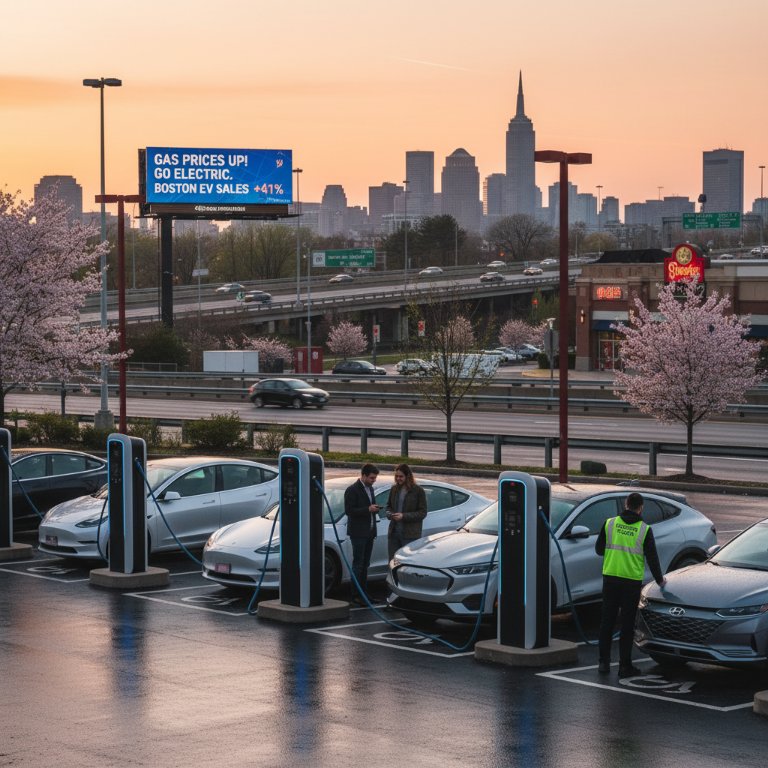
The Greater Boston area is experiencing an unprecedented surge in electric vehicle (EV) demand, sharply contrasting a national slowdown. In March 2026, searches for EVs within the region dramatically escalated by a staggering 41% from late February, fueled directly by surging gas prices attributed to the ongoing war in Iran. This local phenomenon offers a potent glimpse into how a confluence of external pressures and evolving market dynamics can rapidly accelerate EV adoption.
This robust regional interest stands in stark opposition to the broader national landscape, where new EV sales have faced a year-over-year decline following the expiration of crucial federal tax credits. For years, these credits served as a significant financial incentive, softening the upfront cost of new EVs and driving early adoption. Their absence has undeniably created headwinds for new vehicle sales across the country, leading many industry analysts to question the immediate future of EV growth without direct government subsidies. However, Boston's current trajectory suggests that while federal incentives may have waned, other powerful market forces are stepping in to fill the void, particularly in regions susceptible to volatile fuel costs.
A Confluence of Factors Driving Local Adoption
- Escalating Gas Prices: The most immediate and significant catalyst is the dramatic rise in gasoline prices, directly linked to the war in Iran. For many commuters in the densely populated Boston metropolitan area, where fuel costs can disproportionately impact household budgets, the financial burden of internal combustion engine (ICE) vehicles has become untenable. EVs, with their lower per-mile fueling costs (especially when charged at home), suddenly offer a clear path to significant savings.
- Falling Used EV Prices: The used EV market has become a critical entry point for many prospective buyers. As new federal tax credits disappeared, a natural softening in used EV prices has made electric models more accessible than ever before. This shift addresses one of the primary barriers to EV adoption: upfront cost. Savvy consumers are now finding compelling value in pre-owned electric vehicles, further boosting local demand.
- Expanding Charging Infrastructure: A robust and continuously expanding charging network within and around Boston is also playing a pivotal role. Concerns about 'range anxiety' and the availability of charging points have historically deterred potential EV owners. However, with more public, workplace, and residential charging options, the practicality of owning an EV has dramatically improved, mitigating a key apprehension for many.
Why This Matters:
This surge in Boston's EV market is far more than a regional anomaly; it's a critical bellwether for the broader automotive industry and consumer behavior:
- Market-Driven Adoption Takes Center Stage: The Boston scenario unequivocally demonstrates that while subsidies can accelerate growth, market fundamentals—primarily fuel costs, affordability, and infrastructure—are powerful drivers of adoption. The expiration of federal tax credits, initially perceived as a major setback, might instead force a healthier, more organic market maturation, especially for used vehicles.
- Regional Strategy is Paramount: Automakers and policymakers must recognize the increasingly divergent regional EV landscapes. A one-size-fits-all national strategy is insufficient. Markets like Boston, with high fuel costs, progressive environmental policies, and robust infrastructure development, will demand targeted approaches, potentially focusing on more affordable models and extensive charging solutions.
- The Used EV Market is the New Frontier: The importance of falling used EV prices cannot be overstated. This segment makes EVs accessible to a much broader demographic, signaling that manufacturers and dealers must now focus on robust after-sales support, battery health certifications, and diverse financing options for pre-owned electric vehicles. This is where true mass adoption will likely take root.
- Geopolitical Events as Accelerators: The war in Iran's direct impact on gas prices underscores how external geopolitical events can dramatically reshape consumer preferences and accelerate transitions, even in established industries. This volatility will likely keep EVs at the forefront of consideration for cost-conscious consumers.
Boston's dramatic pivot towards electric vehicles, fueled by economic necessity and supported by a maturing ecosystem, offers a compelling blueprint for the future of EV adoption. It highlights a critical juncture where financial practicality, rather than just environmental idealism, is driving consumer choices. As gas prices remain volatile and the accessibility of EVs continues to improve, we can anticipate similar regional surges, further cementing electric vehicles as an increasingly practical financial decision for a growing segment of the population.