BMW iX Winter Endurance Test: Urban EV Ownership Possible, But Demands Discipline in the Cold
The dream of all-electric urban mobility often collides with the harsh reality of winter, a challenge acutely felt by apartment dwellers without dedic...
Editorial Team
World Of EV
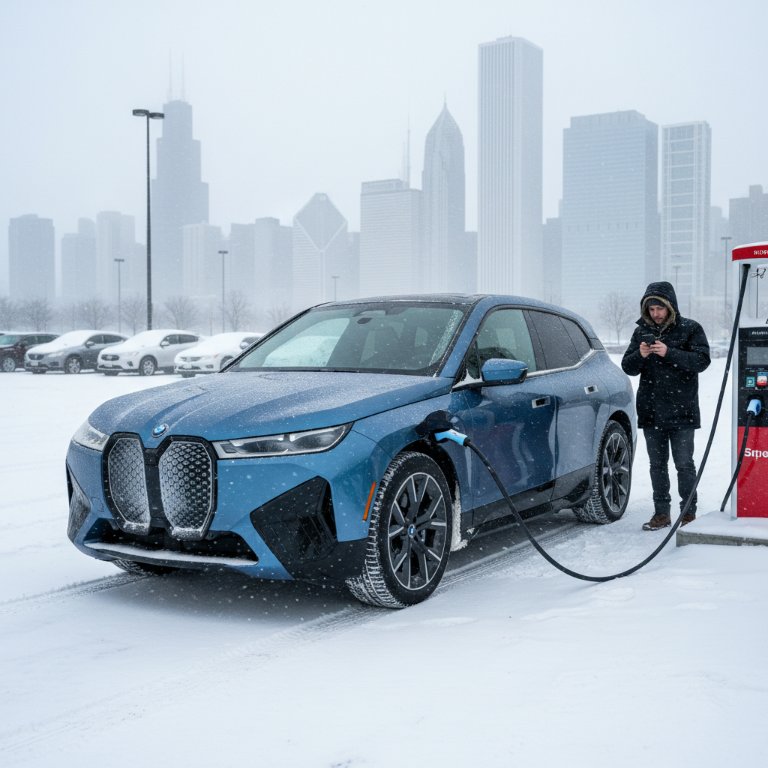
The dream of all-electric urban mobility often collides with the harsh reality of winter, a challenge acutely felt by apartment dwellers without dedicated home charging. A recent seven-day endurance test of a 2026 BMW iX xDrive45 in the brutal Chicago winter, with temperatures plummeting to -10°F and no access to a private charger, offers crucial insights into the viability of EV ownership under such strenuous conditions. As a flagship in BMW's expanding electric portfolio, the iX series aims to blend luxury with sustainability, but its real-world performance in extreme cold, especially away from a home charging station, provides a vital litmus test for the broader EV market.
The Chilling Truth: Range Takes a Hit
One of the most significant concerns for EV owners in cold climates is range degradation. The BMWBLOG test confirmed a notable 25-35% reduction in the iX xDrive45's range during the sub-zero week in Chicago. This outcome, while certainly impactful, remarkably aligns with BMW's own predictions, a testament to the automaker's transparent and realistic approach to cold-weather performance. For context, many industry analysts and real-world tests often cite similar figures for various EV models when temperatures drop significantly, illustrating a universal challenge for current battery technology, regardless of the manufacturer.
The Charging Gauntlet: Speed vs. Extreme Cold
Range loss is only half the battle; recharging in frigid temperatures presents its own set of hurdles. The test revealed that DC fast charging, typically a rapid affair, extended beyond an hour for the iX in the brutal Chicago cold. This extended charging time is a critical factor for prospective owners, especially those reliant on public infrastructure. However, a significant mitigating factor emerged: preconditioning the battery via the My BMW app proved instrumental in improving charging speeds. Preconditioning warms the battery to an optimal temperature range before charging, allowing for more efficient power transfer and mitigating the adverse effects of cold on lithium-ion chemistry.
Urban Adaptability: No Home Charger, No Problem (with caveats)
Perhaps the most encouraging takeaway from the Chicago test is the demonstration that EV ownership can indeed be workable in a major metropolitan area without home charging, even in extreme winter conditions. This is a significant finding for the vast segment of the population living in apartments or without dedicated parking and charging access. The success hinged on two critical factors emphasized by the test: intentional routing and consistent preconditioning. Navigating Chicago's public charging network required deliberate planning, utilizing charging stations strategically, and leveraging the My BMW app's preconditioning features to maximize efficiency and minimize downtime. This experience underscores that while challenging, the absence of a home charger isn't necessarily a deal-breaker for urban EV enthusiasts, provided they embrace a proactive approach to managing their vehicle's energy needs.
Why This Matters:
This real-world evaluation of the BMW iX xDrive45 delivers vital lessons for both consumers and the broader EV industry. For the urban EV enthusiast and prospective buyer without a garage, the test provides crucial reassurance: EV ownership in cold climates, even without a home charger, is achievable. However, it unequivocally signals that success hinges on user diligence in planning routes, utilizing available charging infrastructure effectively, and religiously preconditioning the vehicle. This expands the addressable market for EVs beyond suburban homeowners, a critical step for mass adoption.
From an industry perspective, BMW's accurate range predictions reinforce its credibility and build trust with consumers, suggesting a mature understanding of battery performance across various conditions. This transparency sets a high bar for other manufacturers. Furthermore, the reliance on app-based preconditioning highlights the evolving role of connected car technology; these aren't just convenience features, but essential tools for optimizing EV performance and user experience in challenging environments. This test effectively establishes a realistic benchmark for premium EVs operating in extreme cold, urging continued innovation in battery thermal management and the expansion of reliable, fast-charging networks that are truly robust against the elements.
Conclusion:
The 2026 BMW iX xDrive45's journey through Chicago's brutal winter offers a potent blend of challenge and triumph. While the 'cold tax' on EV range and charging times is undeniable, the test definitively proves that urban EV ownership, even without the luxury of home charging, is a viable reality. The keys to success lie in embracing smart technology like preconditioning and adopting a disciplined approach to route and charge planning. As battery technology continues to advance and charging infrastructure expands, the lessons learned from this frosty BMW iX adventure will undoubtedly pave the way for an even more seamless electric future, even in the harshest of climates.