Beyond the Sticker Shock: New Analysis Reveals EVs Dramatically Cheaper to Own Over Time
For years, a significant hurdle to widespread electric vehicle (EV) adoption has been the perception of a higher upfront cost. Many prospective buyers...
Editorial Team
World Of EV
For years, a significant hurdle to widespread electric vehicle (EV) adoption has been the perception of a higher upfront cost. Many prospective buyers still view EVs as a premium purchase, overlooking the long-term financial benefits. However, a comprehensive new analysis is challenging this conventional wisdom, revealing that EV ownership can lead to substantial savings, significantly undercutting the total cost of owning a gasoline-powered car. This isn't just about saving the planet; it's about saving serious money.
Today, content creator John Cramer brought to light a pivotal Vincentric analysis, demonstrating that while the initial purchase price of an EV might still be higher for some models, the operational and maintenance savings quickly tip the scales. This isn't theoretical; it's a tangible financial advantage for EV owners, and it's a game-changer for the automotive landscape.
Unpacking the Savings Equation
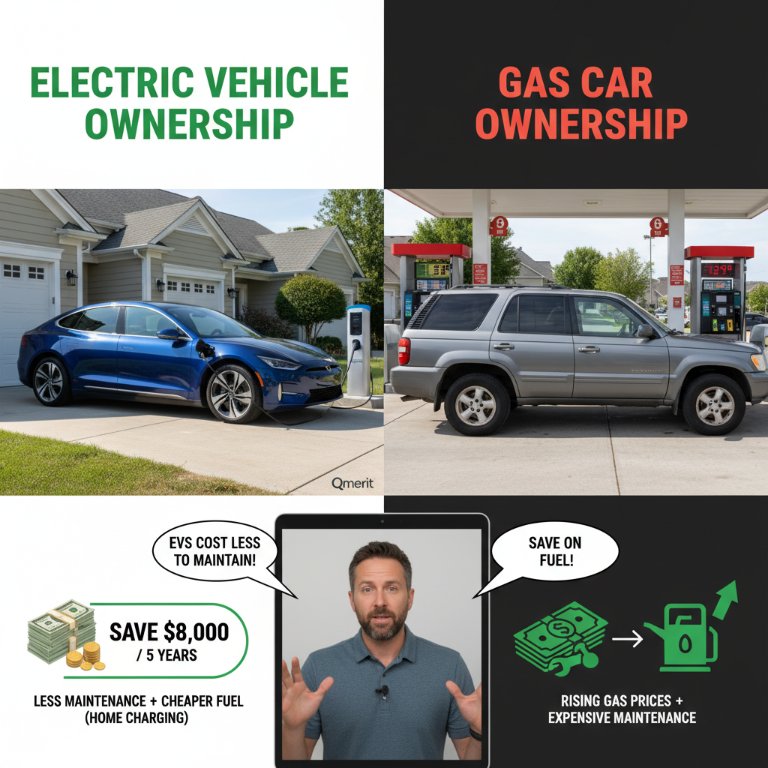
The core of this analysis hinges on two critical areas where EVs unequivocally outperform their internal combustion engine (ICE) counterparts: fuel and maintenance. Cramer explicitly states, 'EVs cost less than gas cars to maintain,' a fact often underestimated by consumers. The absence of oil changes, spark plug replacements, complex exhaust systems, and fewer moving parts drastically reduces the need for routine service and expensive repairs that plague gasoline vehicles. This translates directly into lower workshop bills and less downtime for owners.
Even more compelling are the fueling cost advantages. With gasoline prices exhibiting notorious volatility and generally trending upwards, the consistent, often lower cost of electricity provides a predictable financial benefit. Cramer further emphasizes this point, noting, 'EVs will save you an average of around $8,000 over five years in fueling costs'. This isn't a small sum; it represents a significant portion of a vehicle's value over its prime ownership period, making the financial case for EVs undeniable.
The Home Charging Advantage: Amplifying Your Savings
The ability to refuel an EV at home, effectively turning your garage into a personal charging station, further amplifies these financial benefits. Services like Qmerit, which facilitate professional home charging installations, play a crucial role in maximizing these savings. By leveraging off-peak electricity rates, EV owners can charge their vehicles for pennies on the mile, a luxury unimaginable for gasoline car owners tethered to fluctuating pump prices. This convenience also eliminates the time and cost associated with frequent trips to gas stations, adding another layer of practical savings.
Why This Matters:
This analysis isn't just another data point; it's a critical inflection point for the automotive industry and consumer behavior. It directly addresses one of the most persistent myths surrounding EVs – their perceived unaffordability – and offers a compelling counter-narrative.
- For Consumers: This data provides a powerful economic incentive, shifting the conversation from environmental altruism to practical financial benefit. It empowers prospective buyers to look beyond the sticker price and consider the true total cost of ownership, likely accelerating the decision to go electric.
- For EV Manufacturers: This bolsters their sales narratives and provides concrete ammunition against ICE competitors. It validates their long-term investments in electric platforms and strengthens the argument for continued innovation and scaling production.
- For Traditional Automakers: This serves as a stark warning. Those still heavily invested in ICE technology, or slow to transition, risk losing significant market share as financially savvy consumers increasingly opt for EVs. It signals that the financial argument for electric is now as strong, if not stronger, than the environmental one.
- Market Shift: This further signals a broader market shift, where efficiency and lower running costs become paramount consumer considerations, potentially impacting resale values of ICE vehicles negatively over time and further accelerating infrastructure development for charging solutions.
In essence, the age of justifying EV ownership solely on environmental grounds is drawing to a close. The new frontier is economic sensibility. As the market matures and upfront costs continue to decrease, the compelling long-term savings highlighted by this Vincentric analysis, and championed by experts like John Cramer, will undoubtedly drive mass adoption, making EVs not just the sustainable choice, but the financially intelligent one. The future of personal transportation, it seems, isn't just electric – it's significantly more affordable.