Beyond the Kilowatt: EV Charging's Silent Crisis — Why Infrastructure Built by Non-Drivers Is Failing Real Users
Las Vegas – The shimmering lights of the 2026 EV Charging Summit in Las Vegas have unveiled a stark reality for the burgeoning electric vehicle ecosys...
Editorial Team
World Of EV
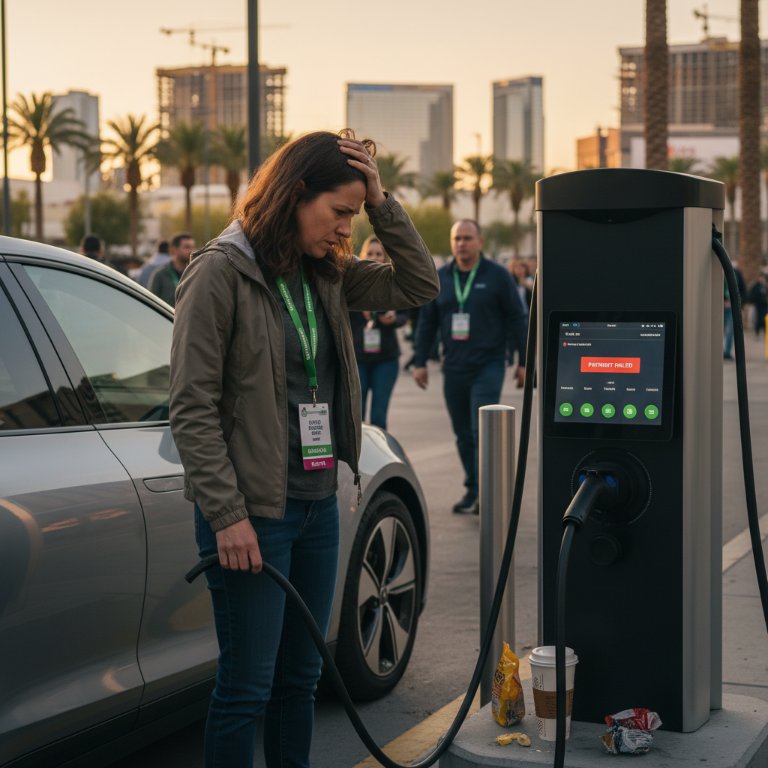
Las Vegas – The shimmering lights of the 2026 EV Charging Summit in Las Vegas have unveiled a stark reality for the burgeoning electric vehicle ecosystem: the era of technological innovation as the primary hurdle for EV charging is over. In a powerful pivot that should resonate across the entire industry, experts declared that the challenge is no longer about if we can build chargers, but how well we execute their deployment and operation. This revelation signals a critical shift, moving the spotlight from engineering prowess to the often-overlooked crucible of customer experience.
For years, the narrative around EV charging revolved around overcoming fundamental technological barriers – developing faster charging speeds, improving battery compatibility, and simply building enough stations to quell range anxiety. While those battles were hard-fought and largely won, a new, more insidious problem has taken root: a profound 'customer experience gap.' The summit highlighted a jarring statistic: approximately 7 out of 10 attendees involved in the EV charging infrastructure — the very people designing, deploying, and managing these systems — do not regularly use public EV charging themselves. This disconnect, as World Of EV has long cautioned, leads to a system that, while impressive on paper, often devolves into a frustrating ordeal for actual EV drivers.
The 'Experience Gap' Uncovered
This fundamental disconnect explains why charging stations might boast impressive kilowatt ratings and widespread availability, yet consistently fall short in real-world usability. When the architects of a system don't experience its daily pain points, optimization efforts inevitably target the wrong metrics. Imagine a public transportation system designed by individuals who only ever drive private cars; the resulting user experience would likely be cumbersome and illogical. This is precisely the scenario unfolding in the EV charging space. Features like intuitive payment systems, reliable uptime, clear signage, adequate shelter, and even thoughtful station layout often take a backseat to raw power delivery or network size, because the user perspective is missing from the development process.
The Maturing Economics of Charging
Compounding the user experience dilemma is the still-maturing business side of EV charging. The summit emphasized that economics are now directly driving the experience, yet the foundational contractual agreements between site hosts, infrastructure developers, and financiers often remain underdeveloped. This lack of robust, forward-thinking business models can lead to fragmented ownership, unclear responsibilities for maintenance and customer support, and ultimately, a subpar experience for the end-user. The industry is grappling with moving beyond pilot projects to sustainable, scalable business operations, and the complexity of multi-party agreements presents a significant, often invisible, obstacle to seamless service delivery.
Why This Matters:
This isn't just industry chatter; it’s a seismic shift that dictates the future of EV adoption and the profitability of charging networks. For EV drivers, this signals both a warning and a potential turning point. Continued frustration with charging infrastructure could stall broader EV adoption, despite compelling vehicles hitting the market. However, if the industry heeds this wake-up call, we could see a rapid improvement in the reliability and user-friendliness of public charging. Those who ignore this will undoubtedly lose market share and customer trust.
Charging network providers are at a critical juncture. Who wins? Companies that embrace a user-centric design philosophy, integrating feedback from actual EV drivers into every stage of development, from app design to physical station layout. Those who invest in robust, transparent maintenance protocols and responsive customer support will build invaluable brand loyalty. Who loses? Those who continue to see charging as purely a utility provision rather than a service experience. This is a do-or-die moment for many, as negative experiences are amplified in the connected world, and reputation is paramount.
For policymakers and investors, this signals a need to shift focus from merely funding the number of chargers to incentivizing quality and reliability. Metrics must evolve beyond simple availability to include uptime percentages, transaction success rates, and user satisfaction scores. The market is signaling a demand for maturity beyond the kilowatt, emphasizing seamless service delivery and robust, well-defined partnerships.
Conclusion:
The 2026 EV Charging Summit has delivered a powerful, undeniable message: the future of EV charging hinges not on breakthrough technology, but on flawless execution and an unwavering focus on the customer. The industry must bridge the critical 'experience gap' by actively involving EV drivers in the development process and establishing robust business frameworks. Only by doing so can we truly unlock the full potential of electric mobility and ensure that charging an EV is as convenient and reliable as fueling a gasoline car.