Beyond the Hype: EV Owners Weigh In on Daily Realities – The Good, The Grid, and The Arctic Chill
The electric vehicle revolution continues its relentless march, with new models and technological advancements announced almost weekly. Yet, as EVs tr...
Editorial Team
World Of EV
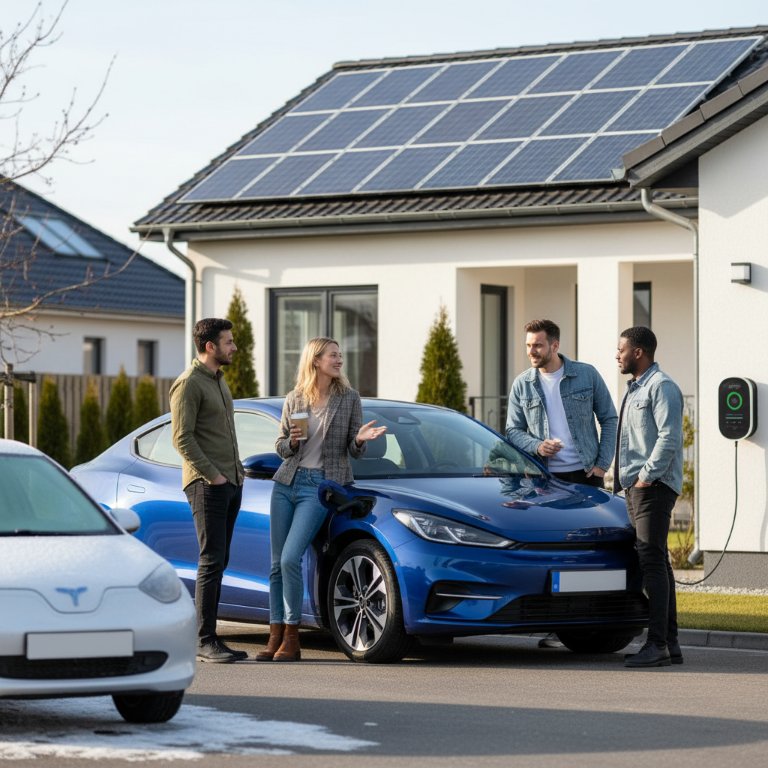
The electric vehicle revolution continues its relentless march, with new models and technological advancements announced almost weekly. Yet, as EVs transition from early-adopter novelty to mainstream practicality, the real-world experiences of daily drivers offer invaluable insights beyond manufacturer specifications. A recent robust discussion among EV owners, highlighting the spectrum of daily use, reveals a compelling narrative of satisfaction mixed with crucial challenges that the industry must address head-on.
The Daily Drive: Silent Bliss and Instant Power
For many, the transition to an electric vehicle has been nothing short of transformative. Owners consistently praise the inherent advantages that reshape the daily commute and weekend errands. The driving experience itself is frequently cited as a major draw:
- Unrivaled Smoothness and Quiet: EVs offer a serene cabin experience, devoid of engine vibrations and road noise, providing a level of refinement often associated with luxury vehicles.
- Instantaneous Acceleration: The immediate torque delivery characteristic of electric motors provides exhilarating acceleration, making merging onto highways or overtaking effortless and responsive.
- Home Charging Convenience: The ability to 'fuel up' overnight in one's own garage is a game-changer. This convenience is amplified significantly for those leveraging renewable energy sources like solar panels, effectively decoupling their transportation costs from fluctuating energy markets.
- Freedom from the Pump: A recurring sentiment is the sheer satisfaction of bypassing gas stations entirely, saving time and avoiding the mess and fumes associated with internal combustion engine (ICE) vehicles.
- Environmental Contribution: Many owners take pride in contributing to cleaner air and reducing their carbon footprint, aligning their personal values with their mode of transport.
These factors underscore why a significant portion of EV owners express deep satisfaction, finding that the benefits profoundly outweigh the perceived inconveniences.
Navigating the Challenges: Grid Demands and Arctic Anxieties
However, the candid discussions also illuminate areas requiring critical attention from both manufacturers and infrastructure planners. The rosy picture of EV ownership, while largely true, faces significant hurdles as adoption scales:
- Grid Strain Concerns: As millions more EVs hit the road, the aggregate demand on national power grids becomes a legitimate concern. While smart charging solutions and renewable energy integration are part of the answer, the stability and capacity of existing infrastructure require substantial upgrades to avoid potential overloads, particularly during peak demand.
- Pedestrian Safety and Silent EVs: The quiet nature of EVs, a selling point for drivers, paradoxically poses a safety risk for pedestrians, cyclists, and visually impaired individuals who rely on auditory cues to detect approaching vehicles. While newer regulations mandate artificial warning sounds at low speeds (typically below 20-30 km/h or 12-19 mph), ensuring these are effective without being intrusive remains an ongoing design challenge.
- Long-Distance Travel: Planning is Paramount: While entirely manageable, road trips in an EV still demand more meticulous planning compared to ICE vehicles. Charging stops, while becoming more frequent, inevitably add to journey times. This is a critical point for prospective buyers accustomed to rapid refueling and vast gas station networks.
- Extreme Cold Performance: A Stark Reality: Perhaps one of the most sobering insights comes from regions experiencing severe winter conditions. A user in Scandinavia reported significant battery consumption and even a 'change battery externally' notification while parked in -15 degrees Celsius (5 degrees Fahrenheit). This highlights a fundamental limitation: cold weather drastically reduces battery efficiency and range, and can even compromise battery health. Unlike ICE vehicles that simply start less efficiently in the cold, an EV's core energy storage can be severely impacted, leading to range anxiety or, in extreme cases, operational issues that demand external intervention – a significant hurdle for mass adoption in colder climates.
Why This Matters:
The candid feedback from the EV owner community isn't just anecdotal; it represents a critical pulse check on the industry's progress and future trajectory. This deep dive into user experience underscores several key implications:
- Maturing Market Demands Holistic Solutions: The initial 'wow' factor of instant torque and silent operation is evolving into a demand for a seamless, reliable, and predictable ownership experience across all conditions. Automakers can no longer simply focus on range and charging speed; they must address the entire ecosystem, from grid impact to cold-weather resilience.
- Infrastructure is the New Battleground: While vehicle tech progresses rapidly, the bottleneck is increasingly infrastructure. Companies like Tesla, with their Supercharger network, have always understood this. For legacy automakers, partnerships and significant investment in reliable, widespread, and diverse charging solutions (including Level 2 home charging, DC fast charging, and even potential battery swapping for commercial fleets) are not merely value-adds but existential necessities.
- Cold Weather Performance: A Crucial Differentiator: The 'change battery externally' notification from a user in a cold climate is a stark warning. This isn't just about reduced range; it points to fundamental battery management challenges that must be overcome for true global adoption. Companies that can engineer robust, efficient, and reliable battery performance in extreme temperatures will gain a significant competitive advantage. This is where innovation in battery chemistry, thermal management systems, and even solid-state battery technology becomes paramount, moving beyond the current industry leaders like Tesla's 4680 cells or BYD's Blade batteries to address specific environmental challenges.
- Who Wins and Who Loses? Winners will be companies that proactively listen to these user experiences, invest heavily in infrastructure, and push the boundaries of battery technology and thermal management. They will integrate their vehicles into a smart grid, offering solutions that benefit both the driver and the energy network. Those who merely chase specs and fail to address the practicalities of real-world ownership, particularly in diverse climates, risk alienating a growing segment of sophisticated buyers. This is a do-or-die moment for many brands to prove their long-term viability in the EV space.
The Road Ahead: Evolution Through Experience
The current generation of EV owners is effectively beta-testing the future of transportation. Their feedback is a goldmine, highlighting not only the immense benefits but also the critical areas for improvement. For the EV industry, the path forward is clear: sustained innovation in battery technology, aggressive build-out of intelligent charging infrastructure, and a proactive approach to grid integration are paramount. Only by addressing these real-world challenges can electric vehicles truly move beyond early adoption and fulfill their promise as the dominant force in global mobility.