Autonomous Crossroads: NHTSA's Escalated FSD Probe Puts Tesla on Notice After Fatal Crash
The National Highway Traffic Safety Administration (NHTSA), the federal auto regulator, has significantly escalated its investigation into Tesla's Ful...
Editorial Team
World Of EV
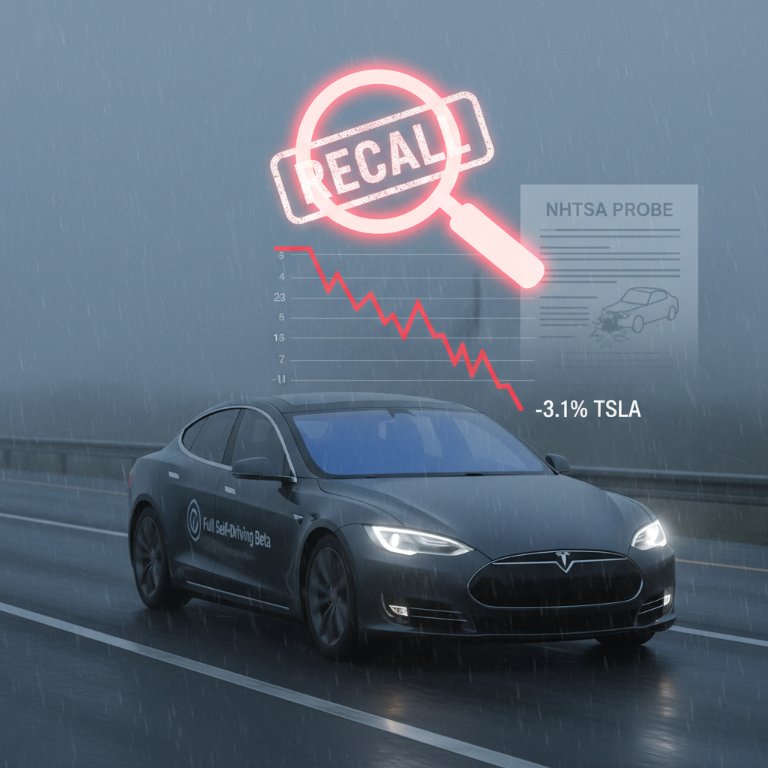
The National Highway Traffic Safety Administration (NHTSA), the federal auto regulator, has significantly escalated its investigation into Tesla's Full Self-Driving (FSD) system, a move that could redefine the future of autonomous driving technology. This intensified scrutiny follows multiple crashes, tragically including one fatality, where the advanced driver-assistance system allegedly failed to prompt drivers to intervene, particularly in challenging visibility conditions. The probe now encompasses a staggering 3.2 million Tesla vehicles, signaling a profound moment for the automaker and the broader EV industry.
The Deepening Regulatory Chasm
For years, Tesla's FSD has existed in a precarious state, offering a vision of fully autonomous driving while operating under a 'beta' label, implying continuous development and requiring active driver supervision. Despite this caveat, the system’s nomenclature itself has drawn criticism for potentially overstating its current capabilities and fostering a false sense of security among users. This latest escalation from NHTSA stems from nine specific incidents where FSD reportedly failed to adequately alert drivers to take control, exacerbating the risks in poor visibility. Unlike previous preliminary investigations, this advanced engineering analysis paves the way for potential enforcement actions, most notably a widespread recall that could impact millions of vehicles. This heightened regulatory pressure immediately sent ripples through the market, contributing to a 3.1% drop in Tesla's stock as investors reacted to the growing uncertainty surrounding one of the company's most ambitious and profitable technologies.
FSD's Troubled Trajectory and Market Impact
Tesla's FSD has been a cornerstone of CEO Elon Musk's vision, promising a revolutionary shift in personal transportation. However, its rollout has been punctuated by persistent debate regarding its safety, functionality, and regulatory oversight. While Tesla has consistently pushed the boundaries of automotive software, critics, including some safety advocates and lawmakers, have long questioned the ethics of deploying such advanced, still-developing technology on public roads with paying customers acting as de facto testers. This isn't the first time federal regulators have scrutinized Tesla's driver-assistance systems; previous investigations into Autopilot and FSD have led to software updates and increased driver monitoring features. However, the inclusion of a fatal crash and the focus on the system's alleged failure to disengage or alert drivers in critical situations marks a significant escalation, indicating a potential paradigm shift in how autonomous and semi-autonomous systems are regulated in the United States.
Why This Matters:
This isn't just another regulatory hurdle for Tesla; it’s a critical juncture that will have far-reaching implications for the entire autonomous vehicle (AV) landscape. Here’s why this matters to you, the savvy EV enthusiast and industry professional:
- For Tesla: A mandated recall of 3.2 million vehicles would be an unprecedented logistical and financial challenge, potentially costing hundreds of millions, if not billions, of dollars. More importantly, it could severely damage public trust in FSD, impacting future sales and the company's valuation. The core promise of robotaxis and recurring FSD revenue hinges on its reliability and regulatory approval, both of which are now under intense pressure.
- For the AV Industry: This investigation sets a powerful precedent. The outcome will dictate how aggressively NHTSA, and potentially other global regulators, approach the oversight of advanced driver-assistance systems (ADAS) and future autonomous technologies. It signals a move towards stricter accountability for developers when their systems fail, particularly concerning driver alerts and disengagement protocols. This could slow the pace of AV deployment for all players, emphasizing safety and robust testing over rapid market introduction.
- For Consumers: The probe highlights the ongoing debate about the balance between technological innovation and public safety. It underscores the critical importance of understanding the limitations of current ADAS technologies, regardless of their branding. A recall, if issued, would aim to enhance the safety of millions of vehicles, providing a crucial layer of protection for drivers who rely on these systems.
This moment signifies a coming of age for autonomous technology. The days of iterating rapidly with minimal oversight appear to be drawing to a close, replaced by a more rigorous, safety-first approach from regulators.
Tesla’s Full Self-Driving system now stands at a pivotal moment. The outcome of NHTSA's escalated probe will not only shape the trajectory of Tesla's ambitious autonomous future but also send a clear message across the entire automotive industry: safety and robust system performance are paramount, and regulators are prepared to enforce it with unprecedented scope.