Australian EV Market Heats Up: Steep Discounts Signal Intensifying Price War and Maturing Demand
Australia's electric vehicle landscape is currently undergoing a dramatic transformation, shifting decisively into a buyer's market. With March 2026 d...
Editorial Team
World Of EV
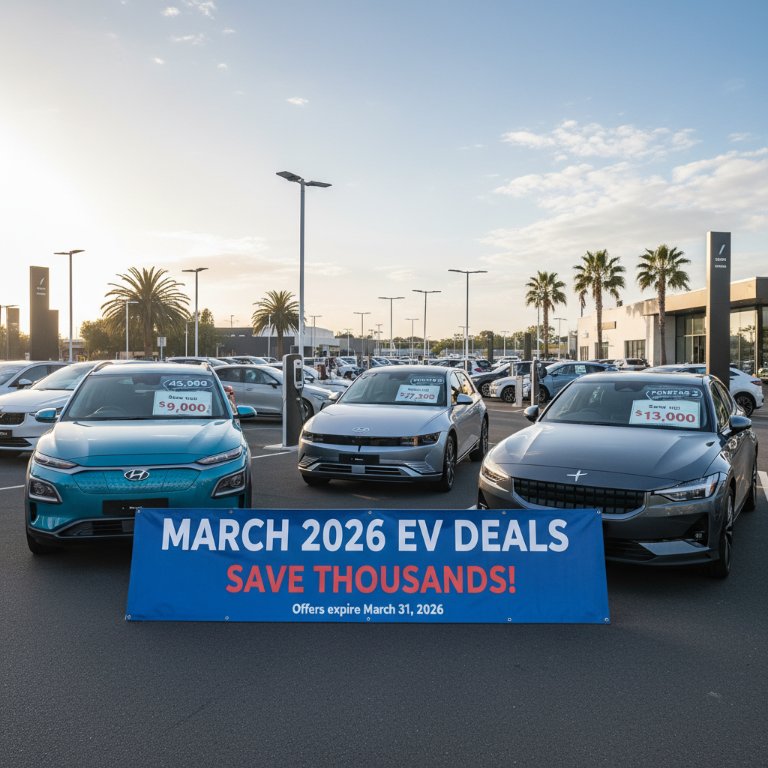
Australia's electric vehicle landscape is currently undergoing a dramatic transformation, shifting decisively into a buyer's market. With March 2026 drawing to a close, manufacturers are rolling out unprecedented discounts and incentives, aiming to capture a larger slice of a burgeoning yet fiercely competitive segment. This aggressive pricing strategy from established players like Hyundai and premium challengers such as Polestar isn't merely a seasonal sales push; it signals a critical moment for the Australian EV market, where price parity is rapidly coming into reach for many segments and an influx of value-driven competitors intensifies the battle for consumer attention.
After years of lagging in EV adoption compared to other developed nations, Australia's market is now accelerating, albeit with significant pressure on pricing. The surge in discounts reflects a strategic response to the growing dominance of Chinese manufacturers, whose aggressively priced models, such as those from BYD, Zeekr, and Geely, have captured substantial market share and fundamentally reset consumer expectations around EV affordability.
Hyundai's Aggressive Rebound Strategy
Hyundai, a brand with a strong foothold in the Australian market, is making a clear statement with its March offers. The company recently faced a substantial $4.2 million fine under Australia's new emissions standards in 2025, largely due to what it described as 'substandard' EV sales figures, indicating a critical need to boost volume.
- The Hyundai KONA Electric is now available from an enticing $45,990 Driveaway, representing a substantial saving of up to $9,000. This places the KONA Electric, which previously faced scrutiny for its pricing against more value-focused rivals and its reliance on a modified internal combustion engine (ICE) platform, in a much more competitive position against popular models like the BYD Atto 3 and MG ZS EV.
- The critically acclaimed Hyundai IONIQ 5, built on a dedicated E-GMP platform, also sees significant Q1 2026 Driveaway Pricing, offering savings of up to $7,200. This move likely aims to maintain its premium appeal while responding to overall market pressures and increasing competition in the medium SUV segment.
These discounts, particularly for the KONA Electric, narrow the price gap significantly between Hyundai's petrol, hybrid, and electric offerings, with just $6,000 separating the hybrid and full electric KONA variants. This strategic pricing aims to drive EV sales and help Hyundai meet its emissions targets, despite the brand's stated primary focus on hybrid vehicles for 2026 and 2027.
Polestar 2's Premium Value Play
Polestar, positioned as a premium electric performance brand, is also engaging in an aggressive push to move units. The Polestar 2 MY2026 Driveaway Offer boasts impressive savings of up to $13,000.
- This substantial discount underscores the intense competition in the premium EV sedan segment, where the Polestar 2, despite its mid-life update and switch to rear-wheel drive, has seen predicted sales slumps. Previously, Polestar had already cut prices by $5,000 in mid-2025 to better compete with the likes of the Tesla Model 3.
- While Polestar recorded strong sales growth in Australia in 2025 (up 38.5%), this was still significantly outpaced by value-oriented Chinese brands like BYD (up 156.2%). The Polestar 2 also faces internal competition from the brand's newer SUV models, the Polestar 3 and 4, which are expected to attract more private buyers in the SUV-dominated Australian market.
Why This Matters:
This wave of aggressive discounts is far more than a simple end-of-quarter clearance; it marks a pivotal moment for the Australian EV market. Consumers unequivocally emerge as the biggest winners, as the upfront cost barrier to EV ownership rapidly diminishes. This accessibility is crucial for mainstream adoption, especially as total cost of ownership (factoring in fuel and maintenance savings) increasingly favors EVs.
For manufacturers, this signals the maturation of the EV market from an early-adopter premium phase to a fiercely competitive, volume-driven environment. Brands like Hyundai are facing a 'do-or-die' scenario to meet new emissions standards, forcing them to price more aggressively and push EV sales harder. Polestar, while maintaining its 'unique brand story,' is clearly feeling the immense pressure from rivals, including Tesla's aggressive pricing and the relentless march of well-equipped, lower-cost Chinese EVs.
This pricing war will inevitably squeeze profit margins for many players, challenging their long-term sustainability if not balanced by significant economies of scale or strong brand loyalty. We can expect this trend to continue, with more strategic partnerships, further price adjustments, and bundled charging solutions becoming commonplace as brands vie for market dominance in Australia's rapidly evolving EV landscape.
The current discounts represent a golden opportunity for prospective buyers to enter the EV market at historically accessible price points, accelerating Australia's transition to electric mobility. Manufacturers, meanwhile, must adapt quickly, innovate relentlessly, and find new efficiencies to thrive in this intensified battle for market share.