Afeela Axed: Honda's Major EV Strategy Reset Claims High-Profile Sony Venture
The ambitious Afeela electric vehicle project, a high-profile collaboration between automotive giant Honda and tech powerhouse Sony, has been abruptly...
Editorial Team
World Of EV
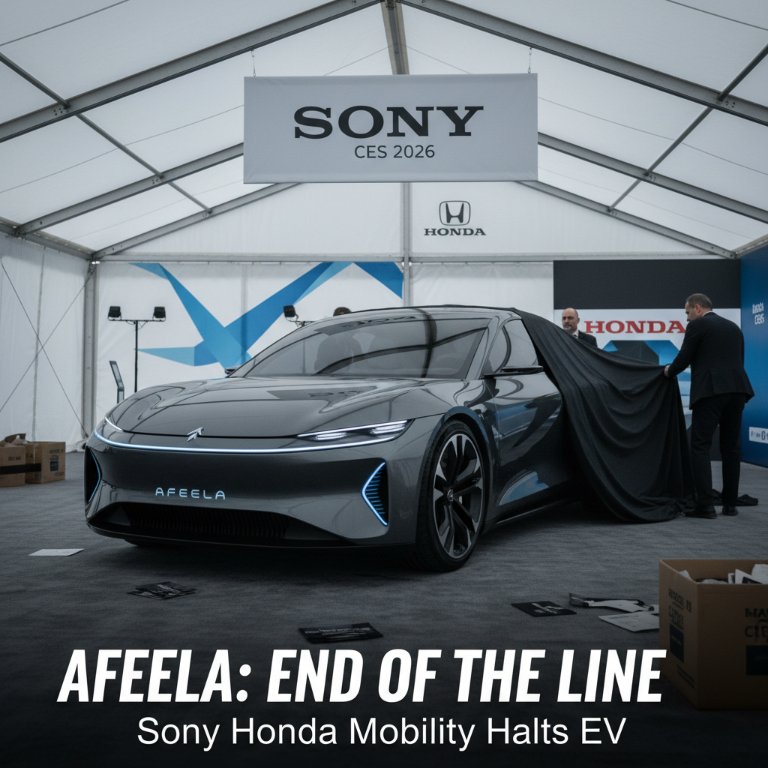
The ambitious Afeela electric vehicle project, a high-profile collaboration between automotive giant Honda and tech powerhouse Sony, has been abruptly discontinued. Sony Honda Mobility (SHM), the joint venture behind the innovative EV, confirmed it no longer has a viable path forward for the Afeela models, citing Honda's comprehensive reassessment of its electrification strategy. This decision marks a significant recalibration for Honda and sends ripples through the broader EV landscape, underscoring the fierce competition and evolving market dynamics.
This isn't an isolated incident. The Afeela's cancellation follows closely on the heels of other major shifts in Honda's EV roadmap, including the earlier discontinuation of the much-anticipated Honda 0 series and the Acura RDX in the U.S.. For customers who had placed reservations for an Afeela vehicle, SHM has committed to issuing full refunds, acknowledging the premature end to their cutting-edge EV aspirations.
The End of an Afeela Dream
The Afeela, unveiled with much fanfare at CES 2026, promised a new era of in-car experience, deeply integrated with Sony's entertainment and technological prowess. The concept car, the Afeela 1, captivated audiences with its vision of a PlayStation-integrated EV, boasting advanced gaming capabilities, immersive in-car movie viewing, and sophisticated generative AI features. Its aim was to merge Honda's manufacturing expertise with Sony's digital ecosystem, targeting the premium EV market in North America first. The venture, established in September 2022, sought to leverage Sony's image sensors and entertainment know-how alongside Honda's vehicle development prowess. However, the dream of a 'PlayStation on wheels' ultimately proved unsustainable in its current form.
Honda's Pivotal Reassessment
Honda's history with electric vehicles has been marked by a cautious, often partnership-dependent approach, with previous models like the Fit EV, Clarity Electric, and the Honda e seeing limited market impact. The company had initially placed significant emphasis on collaborations, including a major initiative with General Motors for Ultium-based EVs like the Honda Prologue and Acura ZDX. However, those plans too have seen significant revisions or abandonments. This latest series of cancellations, including the Afeela and the planned 0 Series that was meant to be a fresh start with a dedicated 'e:Architecture' platform, signals a profound internal shift.
Sources indicate that Honda's reassessment is largely driven by a slowdown in U.S. EV market expansion, coupled with changes in fossil fuel regulations and EV incentives. Facing a potential $15.8 billion loss for its fiscal year 2026, the automaker is clearly prioritizing profitability and scalability. Honda has ambitious long-term goals, targeting 100% EV and fuel cell electric vehicle (FCEV) sales by 2040 globally, with interim targets of 40% by 2030 and 80% by 2035. They also committed to investing over $60 billion in electrification through 2030 and launching 30 new EV models globally by that time. These recent cancellations suggest a realignment of resources to achieve these targets more efficiently, focusing on reducing battery costs by over 20% and overall production costs by 35%.
Why This Matters:
- For Honda: This is a bold, albeit painful, acknowledgment that their previous EV strategy, particularly regarding niche, high-tech offerings and some partnerships, was not yielding the desired results. It indicates a strategic retreat to consolidate resources and focus on a more viable, cost-effective path to electrification. Honda is set to announce a new business plan in May, and the market will be keenly watching for a clearer, more streamlined vision that prioritizes mass-market appeal and profitability over ambitious but potentially risky ventures. This could be a do-or-die moment to establish a competitive pure-EV platform.
- For Sony: The discontinuation is a significant setback for Sony's deeper foray into automotive hardware. While Sony's expertise in sensors, entertainment, and software remains highly valuable to the auto industry, this withdrawal from full vehicle development highlights the immense capital intensity and inherent complexities of car manufacturing, even for a company with vast technological resources. Sony may now reassess its automotive ambitions, potentially seeking other OEM partners to integrate its software and entertainment technologies, rather than pursuing full vehicle production.
- For the EV Market: The Afeela's demise reinforces the brutally competitive nature of the electric vehicle market. It signals that innovative technology and a strong brand name are not enough; market readiness, scalable production, cost efficiency, and a clear path to profitability are paramount. The challenges faced by SHM, including a late market entry compared to pioneers like Tesla and emerging Chinese rivals, along with dealer pushback against direct sales models and fluctuating U.S. EV demand, offer a stark lesson. This event may cause other tech companies eyeing full vehicle production to reconsider their strategies, favoring collaborations that focus on software and component supply rather than hardware manufacturing.
- For Consumers: While those excited by the unique, PlayStation-integrated Afeela concept will be disappointed, the broader EV buyer stands to benefit from a potentially more focused and competitive market. Automakers like Honda, by refining their strategies, may ultimately deliver more practical, affordable, and robust EV options better aligned with mainstream consumer demand.
Conclusion
The abrupt end of the Afeela project is more than just the cancellation of a single vehicle; it's a powerful indicator of Honda's critical self-assessment in a rapidly maturing yet still volatile EV market. This strategic reset, characterized by the shelving of high-profile projects and a focus on cost reduction, suggests Honda is regrouping to tackle the complexities of electrification with renewed pragmatism. The industry will be closely watching Honda's next moves, as the company strives to forge a sustainable and competitive path towards its ambitious zero-emission targets in the years to come.