2026 Chevy Equinox EV: GM's Mass-Market EV Bet Delivers Practicality, Not Thrills
Chevrolet's 2026 Equinox EV LT 2 is rolling into a crucial market segment, signaling General Motors' unwavering commitment to an all-electric future. ...
Editorial Team
World Of EV
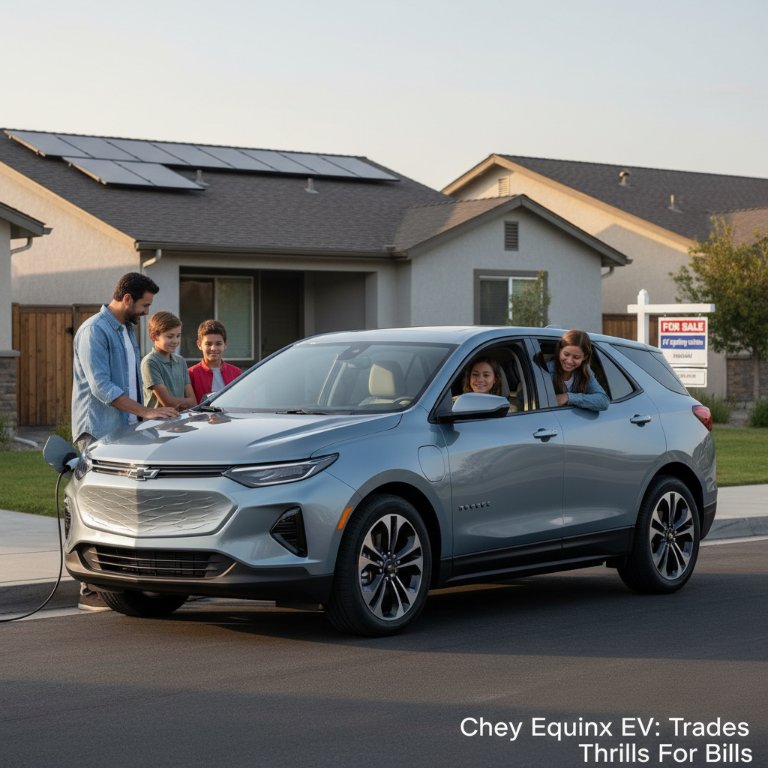
Chevrolet's 2026 Equinox EV LT 2 is rolling into a crucial market segment, signaling General Motors' unwavering commitment to an all-electric future. Built on GM's flexible Ultium platform, the Equinox EV aims to deliver no-nonsense, accessible electric transportation, expanding the company's EV footprint beyond its initial premium offerings like the Cadillac Lyriq and Chevrolet Blazer EV. This strategic move positions the Equinox EV as a direct successor to its popular gas-powered counterpart, targeting a broad audience seeking practical, everyday electric mobility at an approachable price point.
GM has been aggressively transitioning its portfolio, with the Ultium architecture underpinning a diverse range of EVs designed for scalability and varied performance. The Equinox EV, in particular, has seen significant sales success, becoming the top-selling non-Tesla EV in the U.S. in 2025, moving nearly 58,000 units.
Prioritizing Functionality Over Flash
The 2026 Equinox EV LT 2 largely fulfills its mission of providing basic, acceptable transportation rather than an exhilarating drive. This approach aligns with GM's broader strategy to offer affordable electrics, with plans to introduce four EVs under $40,000 by 2027. While a single-motor, front-wheel-drive configuration (210 horsepower, 242 lb-ft of torque) is standard and delivers an EPA-estimated 319 miles of range, a livelier dual-motor all-wheel-drive option is available, boosting output to 288 horsepower and 355 lb-ft of torque with an estimated 307 miles of range.
- Performance (FWD): 210 hp, 242 lb-ft of torque, 0-60 mph in 7.7 seconds.
- Performance (eAWD): 288 hp, 355 lb-ft of torque, 0-60 mph in 5.8 seconds.
- Estimated Range (FWD): Up to 319 miles.
- Estimated Range (eAWD): Up to 307 miles.
- DC Fast Charging: Up to 150 kW, adding approximately 70-77 miles in 10 minutes.
The Controversial Infotainment Strategy: Google Built-in, No CarPlay
The interior of the Equinox EV is notably functional, characterized by a general absence of physical buttons and a prominent 17.7-inch touchscreen. However, a significant omission for many prospective buyers will be the lack of Apple CarPlay and Android Auto integration. This controversial decision, confirmed by GM CEO Mary Barra, marks a broader shift for General Motors, which began phasing out these smartphone projection systems from its new EVs in 2023, including the Blazer EV and Equinox EV.
GM's reasoning centers on taking greater control over the in-car experience, aiming for a more integrated, consistent, and potentially safer infotainment system powered by Google's Android Automotive OS. This native system includes Google Maps, Google Assistant, and access to the Google Play Store, promising deeper vehicle integration and over-the-air updates. While GM emphasizes improved safety and a more seamless user interface by removing the perceived 'clunkiness' of switching between phone and car systems, it's a bold gamble given how deeply integrated CarPlay and Android Auto are into the daily lives of millions of drivers.
Why This Matters:
- Who Wins? General Motors, if the Equinox EV successfully captures the enormous market of buyers seeking an affordable, practical electric crossover. Its accessible price point, coupled with a commendable range and familiar SUV form factor, directly challenges established rivals like the Tesla Model Y, Hyundai Ioniq 5, and Nissan Ariya, often undercutting them on price. Customers prioritizing value, range, and a user experience they perceive as less distracting (due to GM's integrated Google system) will also find a compelling option here.
- Who Loses? EV enthusiasts accustomed to engaging driving dynamics might find the base Equinox EV underwhelming, particularly if they prioritize performance thrills over utilitarian competence. Buyers deeply reliant on Apple CarPlay or Android Auto for navigation, media, and messaging will be forced to adapt, potentially alienating a significant portion of the market where smartphone integration is a 'must-have' feature. Competitors who fail to offer a similarly compelling value proposition in the compact electric SUV segment, especially if GM's pricing remains aggressive, could also face challenges.
- What Does This Signal? This signals GM's unwavering commitment to its Ultium platform and its integrated software ecosystem as central pillars of its EV future. The Equinox EV isn't designed to be a halo car; it's designed to be a volume seller, demonstrating that GM is serious about making EVs accessible to the masses. The move away from CarPlay and Android Auto is a powerful statement about owning the customer experience and potentially unlocking future subscription revenues, a trend other automakers are closely watching.
- Is This a "Do-or-Die" Moment? For GM's vision of widespread EV adoption and its long-term software strategy, the Equinox EV is absolutely a crucial moment. The success of this vehicle, particularly in how consumers react to the absence of Apple CarPlay/Android Auto and the overall functionality of the Google Built-in system, will significantly influence GM's future product development and market positioning. If the integrated system proves genuinely superior and user-friendly, GM stands to gain a competitive edge and substantial revenue streams. If it falls short, the company risks alienating a tech-savvy customer base that values seamless smartphone integration above all else. This isn't merely about selling cars; it's about redefining the entire in-car digital experience.
Conclusion:
The 2026 Chevrolet Equinox EV LT 2 arrives as a pivotal player in the mainstream EV market. While it may not set pulses racing with its driving dynamics, its focus on accessible pricing, respectable range, and practical utility, backed by GM's Ultium platform and bold infotainment strategy, positions it as a significant contender. Its success will be a strong indicator of how effectively General Motors can navigate the complexities of mass-market EV adoption and whether its vision for a fully integrated, GM-controlled digital cabin resonates with a broad spectrum of buyers.